The Innkeepers – Part 3
Last blog, we ended the chapter with the passing of Max and Lina and the sale of the inn. This week, we continue with Bianca, Max’s former housekeeper, who was 19 years younger than him and later became his second wife, inheriting Lina’s magnificent home from the Marx family.
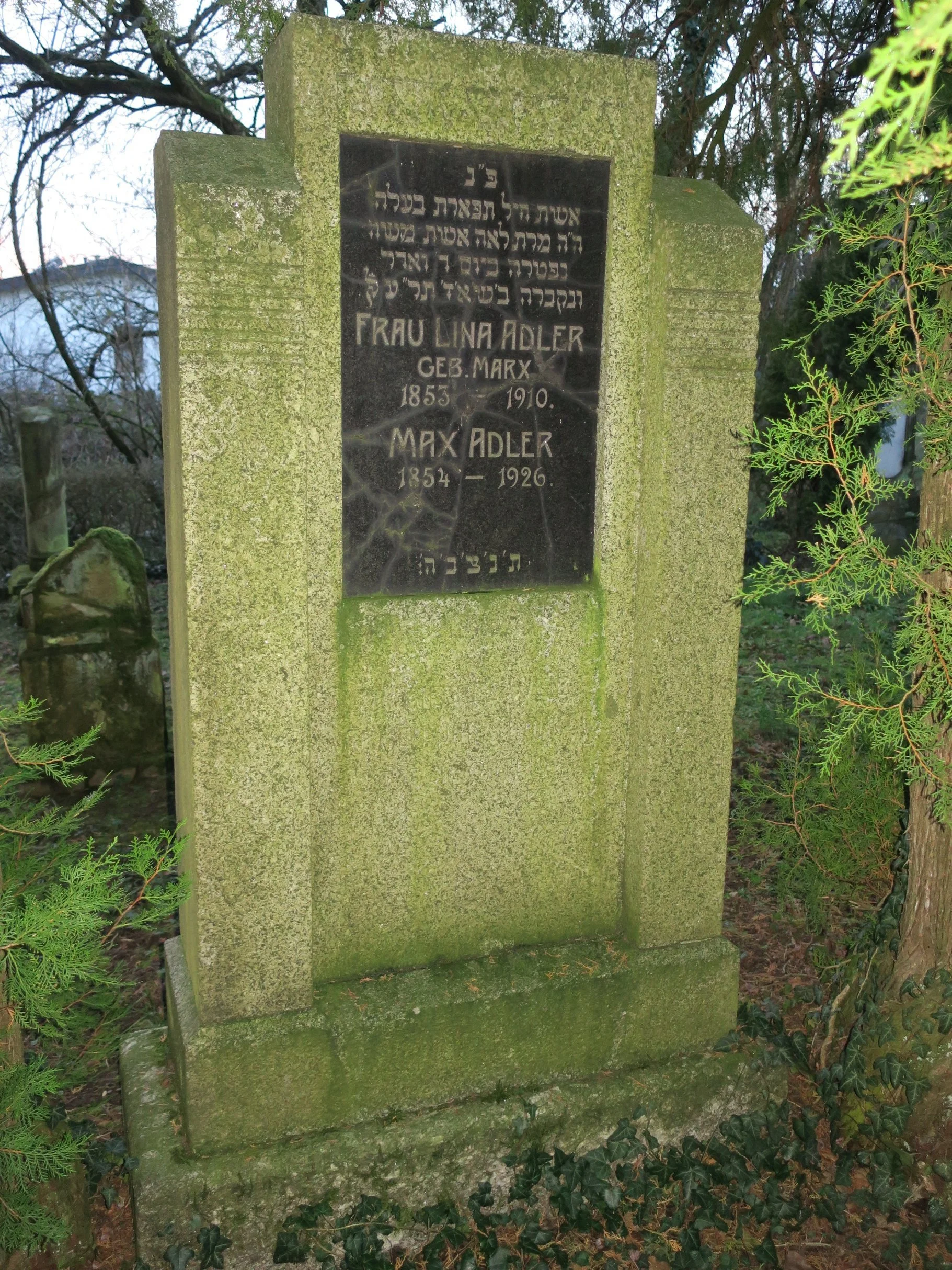
The Gravestone of Lina and Max Adler, Sinsheim Jewish Cemetery
A few days after Max’s death, Bianca announced in a local newspaper that she would continue running the wine business.
Hildegard, the only daughter of Max and Bianca, was just 14 years old when her father passed away. After finishing high school in Sinsheim in 1928, she continued her studies at a business school in Heidelberg and later joined her mother in the wine shop.
Hildegard married a merchant named Saly Wolf, and the couple moved into Bianca’s home. At first, Hildegard helped her mother with the business, and later Saly also joined them, alongside his work as a traveling salesman selling leather goods and shoemaking supplies. Saly supported both women and took part in running the wine business.
On July 1, 1938, the business officially closed. A few months later, in December 1938, Bianca applied for a new identity card. The document carried a large red stamp (used to identify Jews) and included a passport photo, fingerprints, and a physical description. Bianca had held local citizenship until the Reich Citizenship Law came into effect and took it away.
In March 1939, Bianca and Hildegard sold the house to bank manager Heinrich Schmidt. They were forced to sell, and the agreed price of 17,500 Reichsmarks was far below its actual value of 30,000 Reichsmarks. The local Nazi Party, which had been behind the pressure to sell, approved the transaction and even looked for reasons to justify the low price, such as claiming that the apartments had no wooden floors.
According to the agreement, Bianca and Hildegard were allowed to continue living in the ground-floor apartment and the attic free of charge until they emigrated. However, by October 1939, they were forced to leave the house quickly after the building was converted into a military intelligence communications center.
In 1900, after running the inn for 23 years, Max and Lina decided to sell it and begin a new chapter in their lives. This marked the end of 50 years of family ownership.
Over the next three years, they carefully planned their new home at Muthstraße 13, Sinsheim, together with architect Ludwig Jahn from Heidelberg.
The impressive house included wine cellars, a laundry room, an office, servants’ rooms in the attic, five guest rooms, and a large living room- a home perfectly suited for a couple who loved welcoming guests.
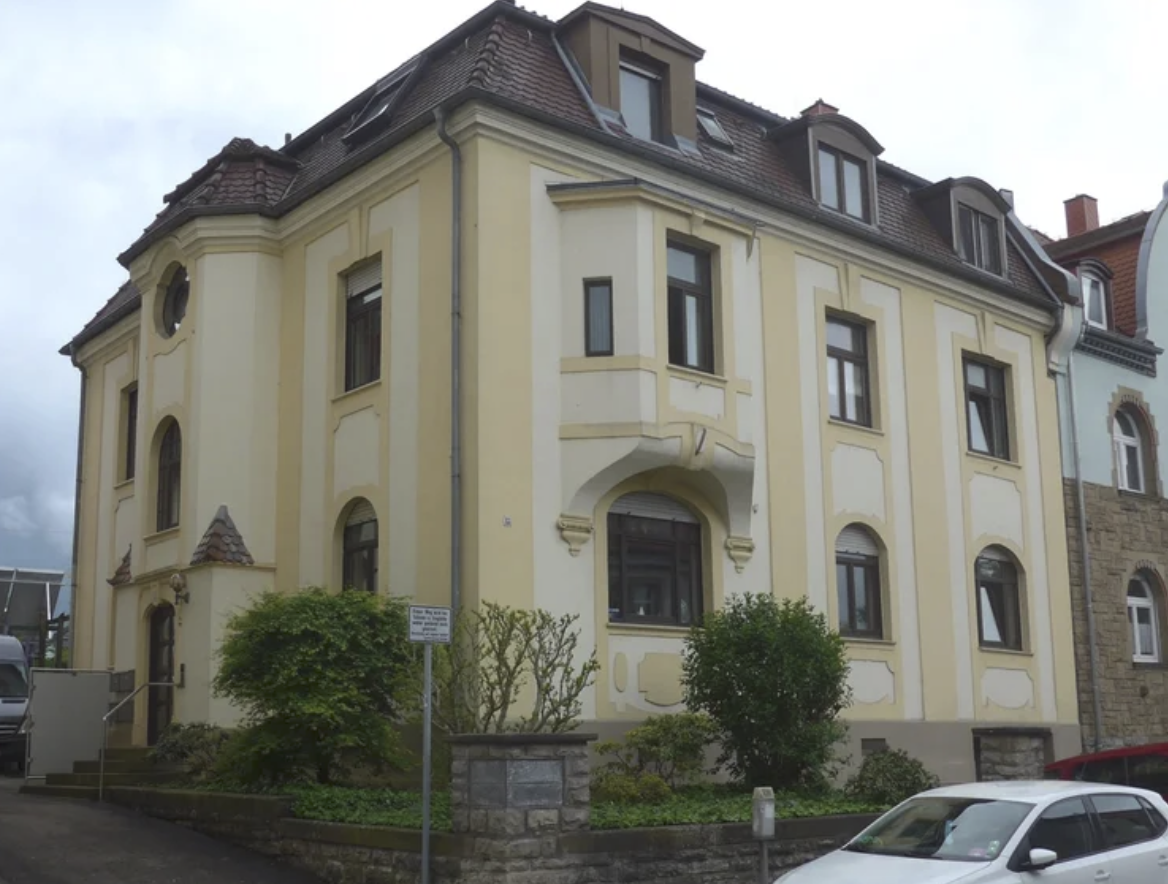
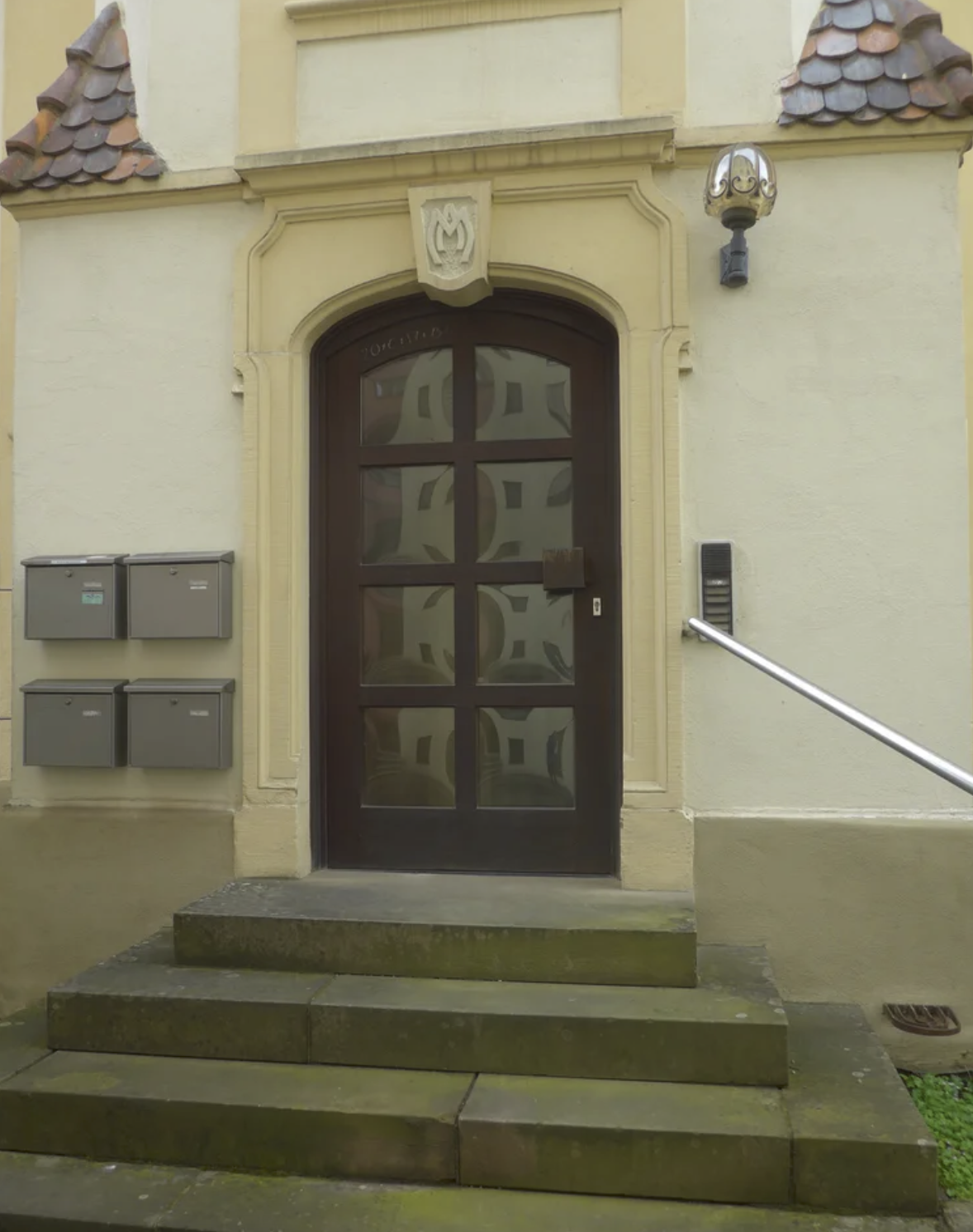
The Adler family home in Sinsheim, as it looks today, with its original architecture preserved.
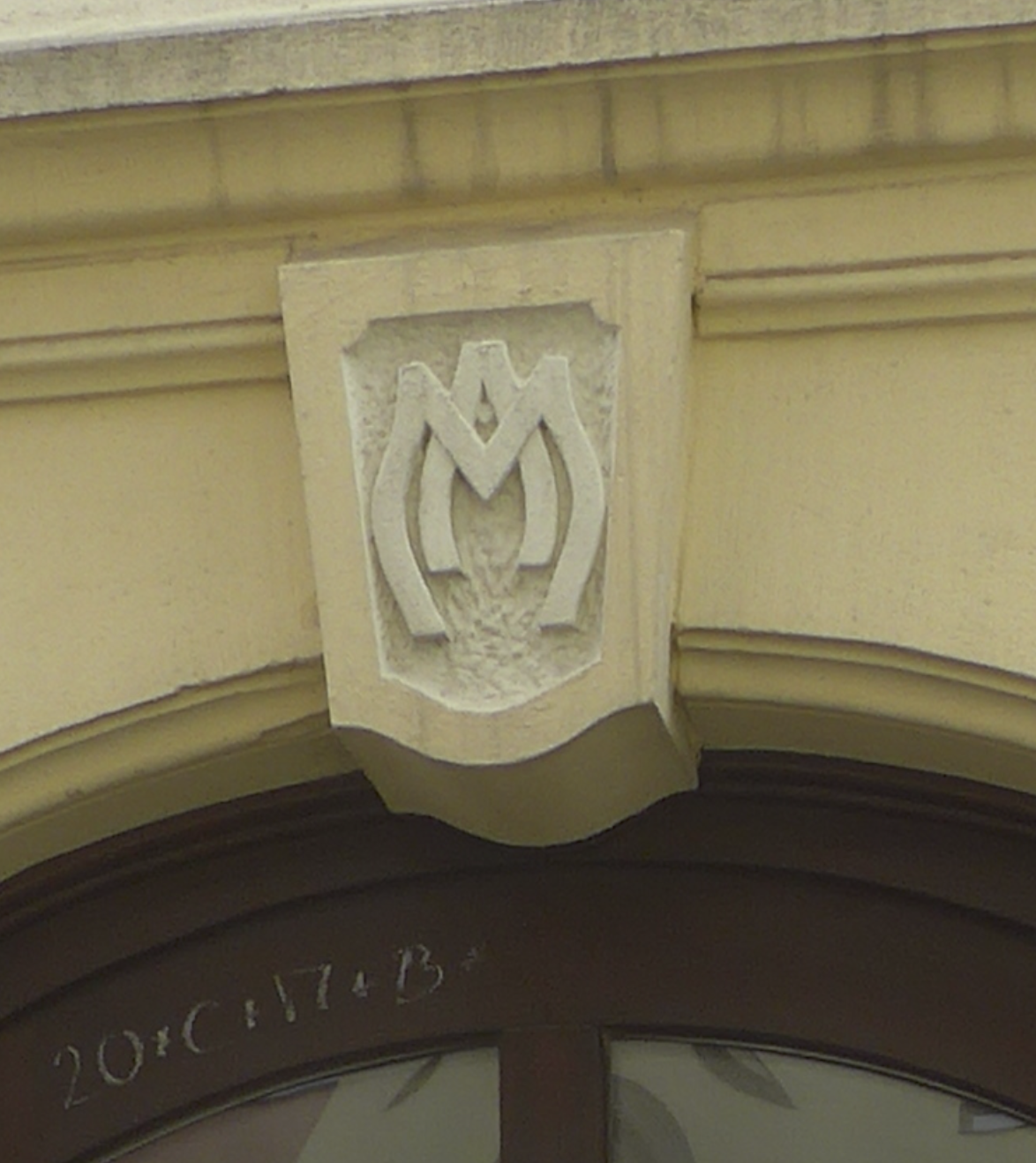
The initials “M.A” (Max Adler) above the entrance to the family home.
Bianca’s last chapter
After selling the house and being forced to leave it, Bianca looked for a relative who could take her in. She first found shelter with neighbors in Sinsheim and later in a nursing home in Mannheim. In December 1939, she was forced to move to the Jewish retirement home in Frankfurt am Main.
Far from her home and family, Bianca lived alone and in poverty. On July 29, 1941, she died at the Jewish nursing home and was buried in the city’s new Jewish cemetery, among those who had chosen to end their own lives rather than fall into Nazi hands.
Bianca’s family story had been difficult and complicated long before the war. She was born into a poor family with eight children. Two of her younger siblings died in childhood. When her father died, she was left to help her mother care for six young children.
The family moved between towns, changing their names and taking on new identities. Despite their poverty and the difficult days when they sometimes ate only eggs, Bianca received a professional education, something that was not common for women at the time.
Her mother, who carried the burden of supporting and caring for the children, sometimes struggled to provide for them and faced complaints from the local community for not giving them proper education.
Four of Bianca’s siblings survived the Holocaust.
Her eldest brother, Josef Reuß, studied law, passed his university and state examinations in 1898, and began his career as a third-class district court clerk in Würzburg.
In 1905, Josef and his wife Sophie moved to Protestant Christianity, and their eldest son, Friedrich, was baptized shortly after his birth. In 1907, the family moved to Augsburg, and Josef was later appointed a judge at the Higher Regional Court in Munich.
In July 1942, despite their conversion, Josef and his wife Sophie were deported to Theresienstadt. Two years later, in March 1944, they both died there.
Bianca’s sister, Ida, was also murdered in the Holocaust.
Another sister, Emma, could not bear the pain and took her own life in 1942.
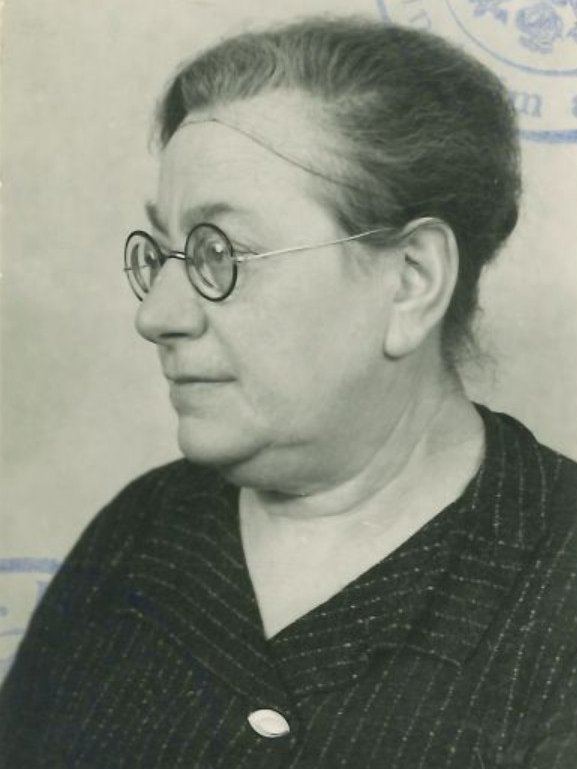
Bianca
New York, New York
Before leaving Germany, Hildegard packed her belongings under the supervision of two customs officers in Sinsheim. Every item was recorded separately, including the year it was purchased and its value. Like her mother, she was required to hand over jewelry and other valuables, but she managed to smuggle out her engagement ring by hiding it in a cream jar.
Saly Wolf was the first to emigrate, The couple traveled separately because they could not find sponsors for both of them. Even after arriving in the United States, Saly struggled to find someone who could sponsor his wife’s entry into the country. Eventually, Flora Stein, his landlady, who was not a relative, offered to help and became her sponsor.
On September 28, 1938, before Hildegard joined him, Saly applied for citizenship and changed his name to Louis because he felt that “Saly” sounded like a woman’s name in America.
He first worked in a packaging factory and later managed to open a butcher shop in Queens Village.
On May 4, 1939, Hildegard sailed from Hamburg to New York, where Saly was waiting for her.
Hildegard and Louis Wolf had two sons, Bernard and William. The family lived in their cousin’s house in Queens.
In August 1946, Louis’s mother, Emma Wolf, joined them. She had survived deportation to the camps and arrived via Marseille aboard a U.S. Army Liberty ship. She spoke German with her grandchildren.
But not everyone in the family survived. Louis’s sister, Betty, was murdered in Auschwitz. Her two sons, Leo and Hans, survived because they had been hidden in France. In 1941, they emigrated to the United States with a group of Jewish children.
Hildegard worked as a cashier in her husband’s butcher shop. Their eldest son, Bernard, later recalled that when he was seven years old, he used to deliver orders to customers and receive a few cents in tips.
Despite their modest lifestyle, the family placed great importance on higher education. Both sons attended prestigious universities, Yale and Stanford, with the help of scholarships.
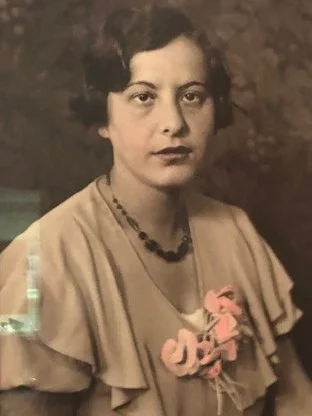
Hildegard wolf - (photo credit - https://www.erinnerungsorte-sinsheim.de/personen/hildegard-wolf)
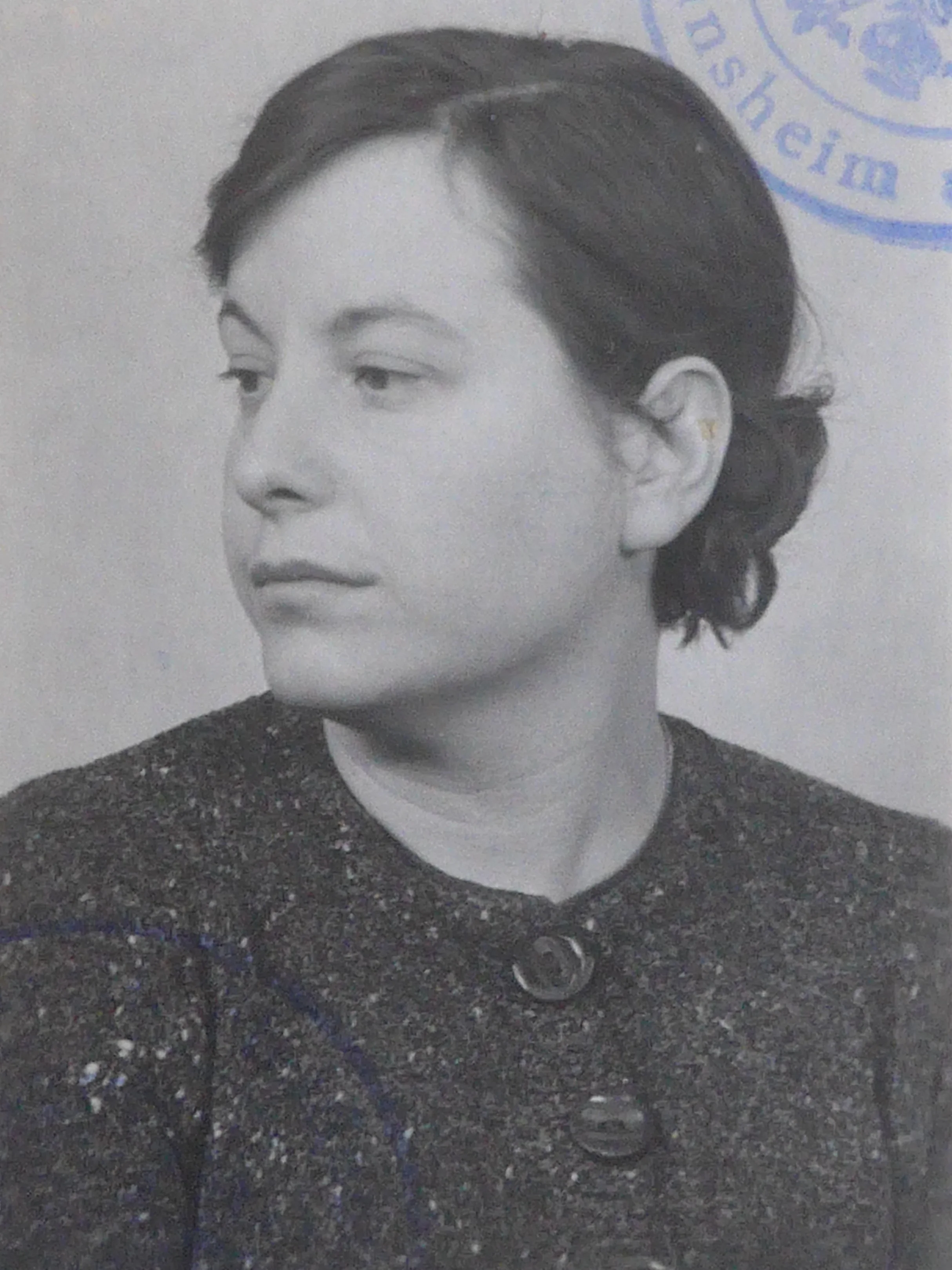
Hildegard wolf 1938
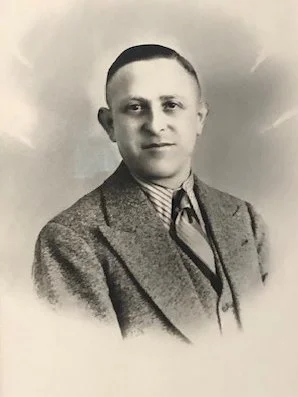
Saly (Louis) Wolf
Louis Wolf grew up in an Orthodox Jewish family in Germany. After immigrating to the United States in 1938, he never returned to synagogue. Although the family continued to celebrate Jewish holidays, their lifestyle became secular.
Louis also worked hard to adjust to life in America. One of his grandchildren later recalled in his memoirs how Louis taught himself English by trying to read and understand The New York Times every day.
In 1987, Hildegard retired. Later, Louis became ill and moved to Toronto to live with their eldest son, Bernard. He passed away in April 1999.
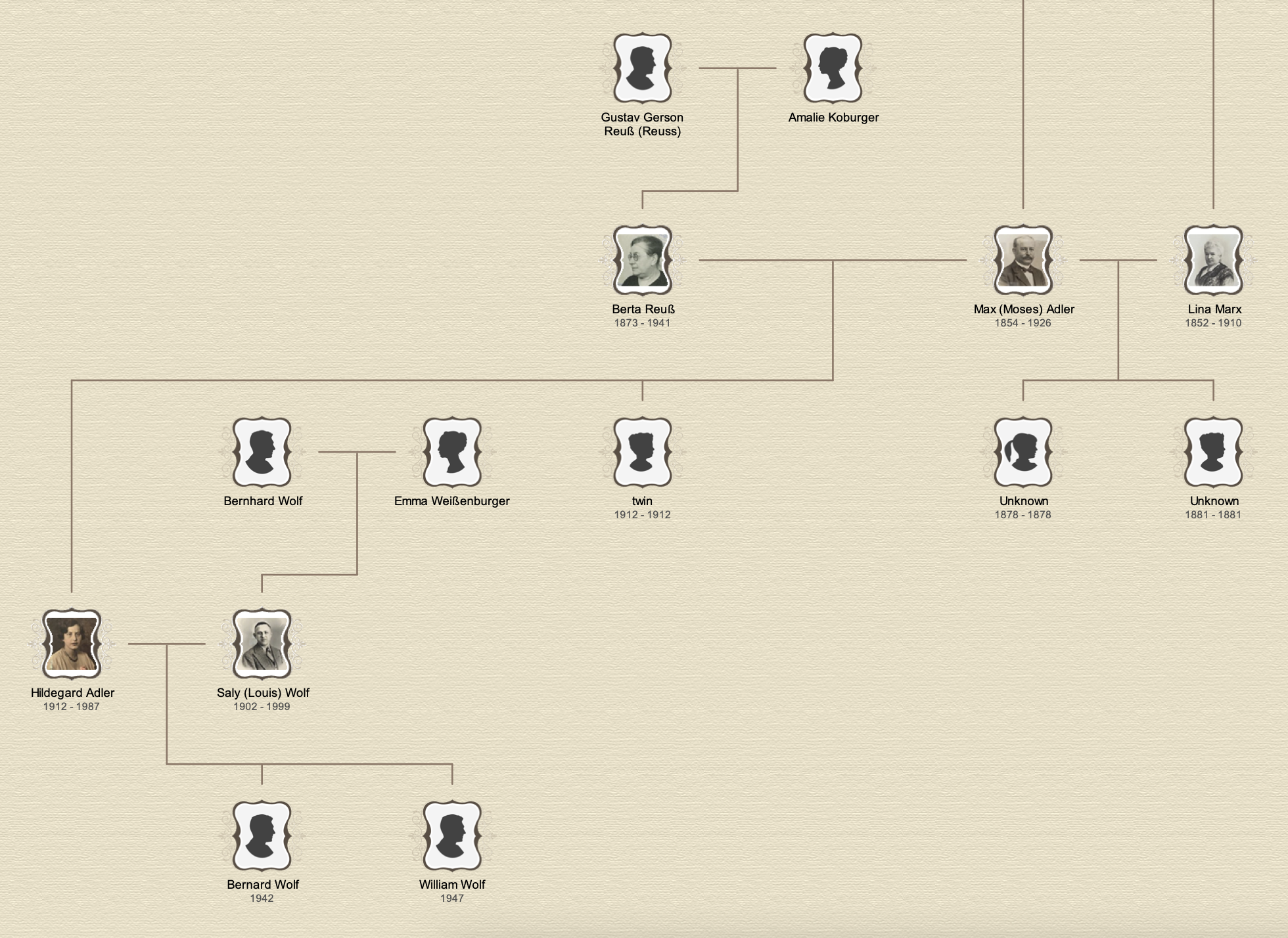
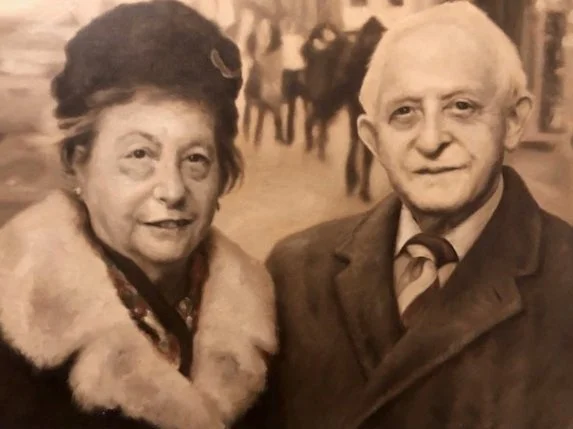
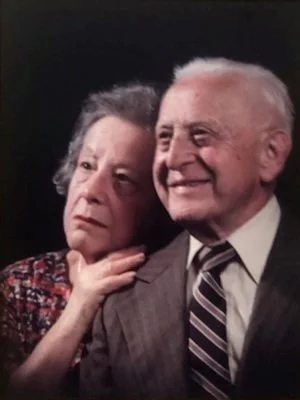
Saly and Hildegard Wolf, 1980s
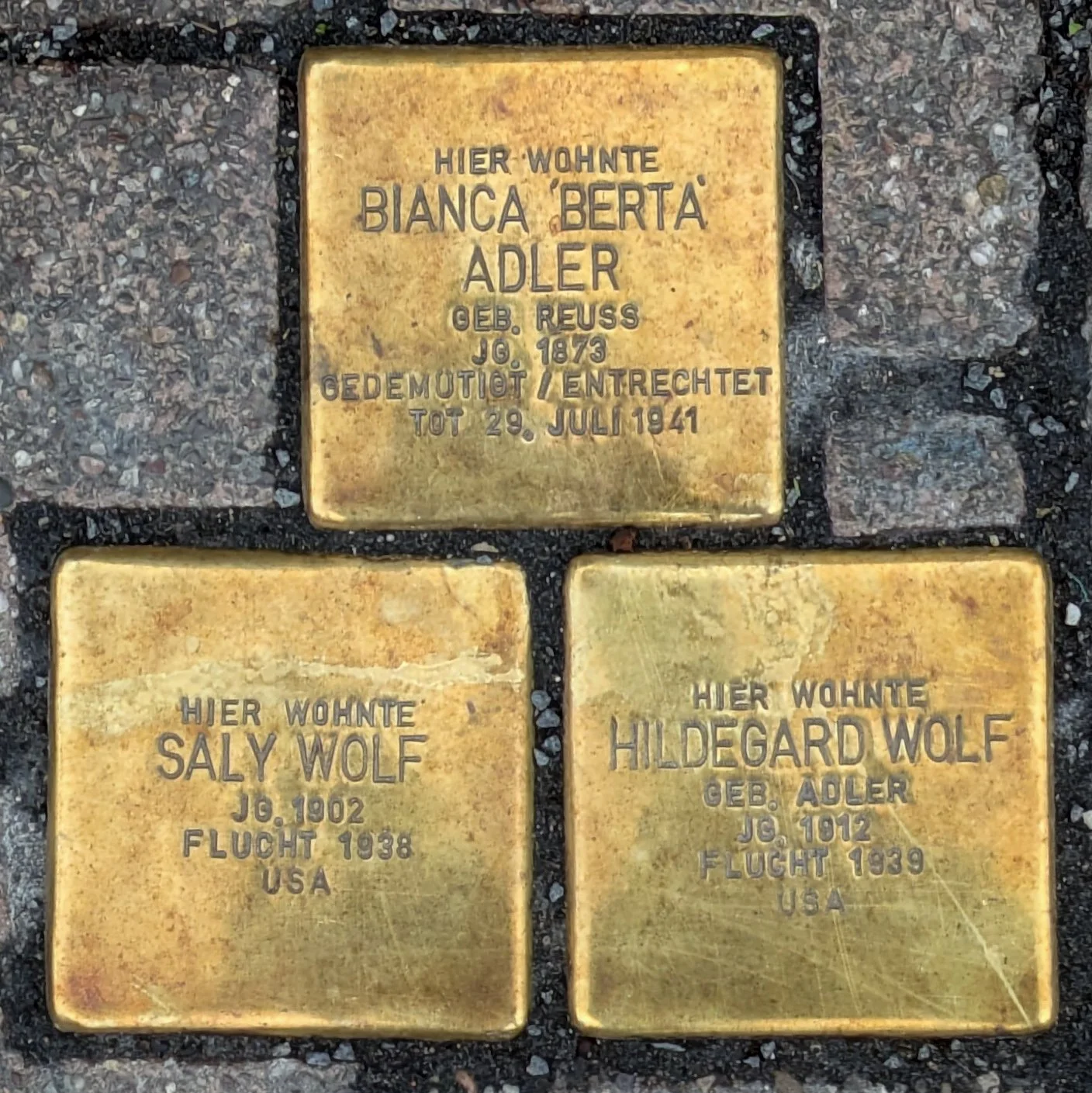
Stolpersteine- Muthstraße 13, Sinsheim
History has a way of repeating itself from generation to generation- stories of love and loss, survival and persecution, difficult choices, and the courage to start again.
What began in a small family inn in Sinsheim, filled with guests and warm hospitality, continued in the home Max and Lina built together. Over the years, the house witnessed love, new beginnings, and heartbreaking losses. Eventually, it was taken from the family through a forced sale and turned into a military intelligence communications center.
But losing the family home was not the end of their story. Across the ocean, Hildegard and Saly were fortunate to survive, find safety, and build a new life and family of their own. Their children had opportunities and access to education.
History can change the course of entire families’ lives, but their strength to stay united, support and help one another, along with the memories and values they carry, lives on through future generations, even after those who were part of the story are gone.
