Rosenthal, Fleischer & Co - Göppingen
Behind every close family - much like every successful kibbutz - stands one family business that holds everyone together.
In 1887, Shmuel Fleischer founded the corset factory Rosenthal, Fleischer & Co.
The company emerged from an earlier Rosenthal family business that had dissolved, and quickly evolved into a tightly bonded family enterprise. The original partners were Shmuel and his brothers, Julius and Leopold Fleischer (whom we met last week - Rosa’s uncles, who introduced her to her future husband), alongside Adolf Rosenthal from London, who left the company as early as 1889.
From the very beginning, it was clear that this factory was destined for great things. In 1894, it moved into a new building constructed especially for the company - modern for its time, filled with light, spacious, and surrounded by gardens where workers could rest and get some fresh air. In 1901, the building was significantly expanded, becoming one of the most impressive examples of advanced industrial architecture in Germany..
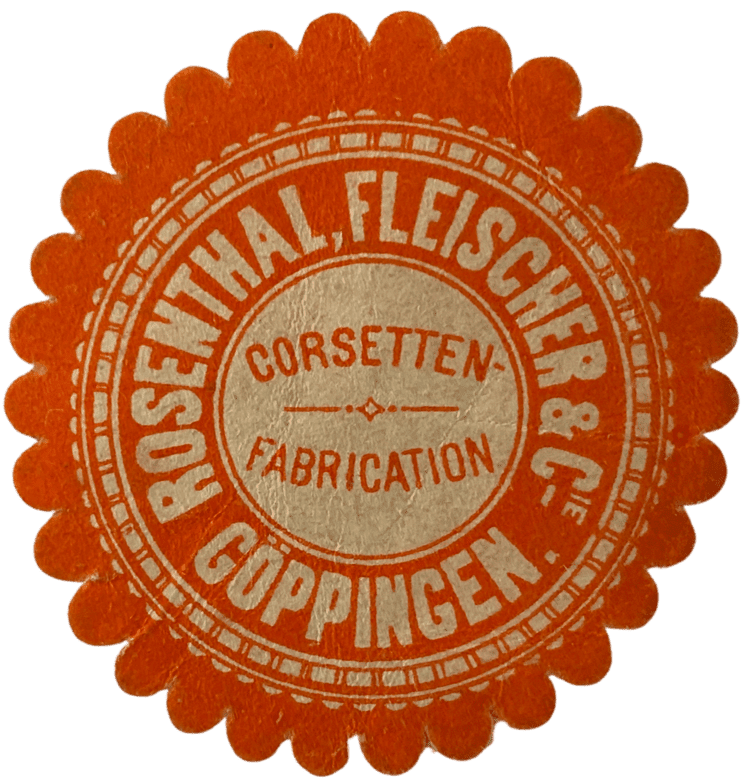
Under Shmuel’s leadership, the factory experienced rapid growth and became a significant player in the textile industry, earning international recognition. The corsets produced there won prizes at world fairs — as early as 1873, the factory received an award at the Vienna World Exhibition — and the company established itself as a leading manufacturer within the German Reich.
Shmuel Fleischer and his wife, Emilie Rosenthaler, had four children: Bernhard, Julius, Arthur, and Paula. As in many family businesses, there was a natural expectation that the next generation would carry on his legacy. But the eldest, Bernhard, chose a different path, becoming a lawyer and beginning his career in Stuttgart in 1907. The two younger sons, Julius and Arthur, remained with the factory and, when the time came, stepped into leadership roles within the company.
In the years leading up to the First World War, the factory was at its peak: hundreds of employees, an excellent reputation, and a company widely regarded as a model of industrial success.
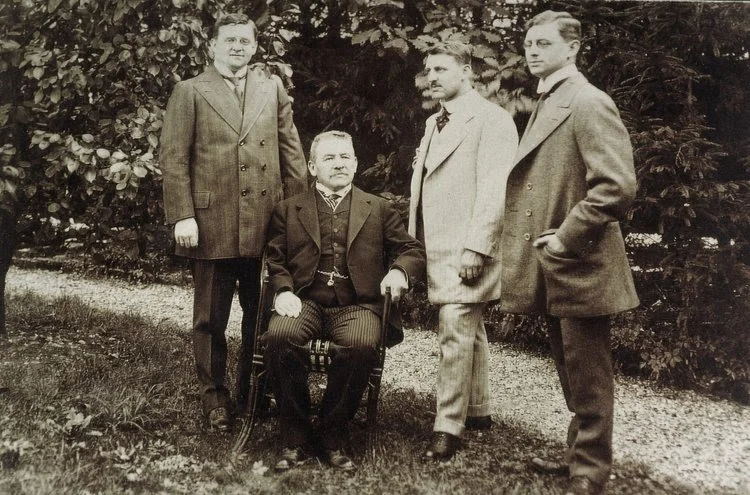
1910 - Chic style!
Shmuel Fleischer (seated), with his sons Bernhard, Julius, and Arthur.
A Small Memory of a Great Factory
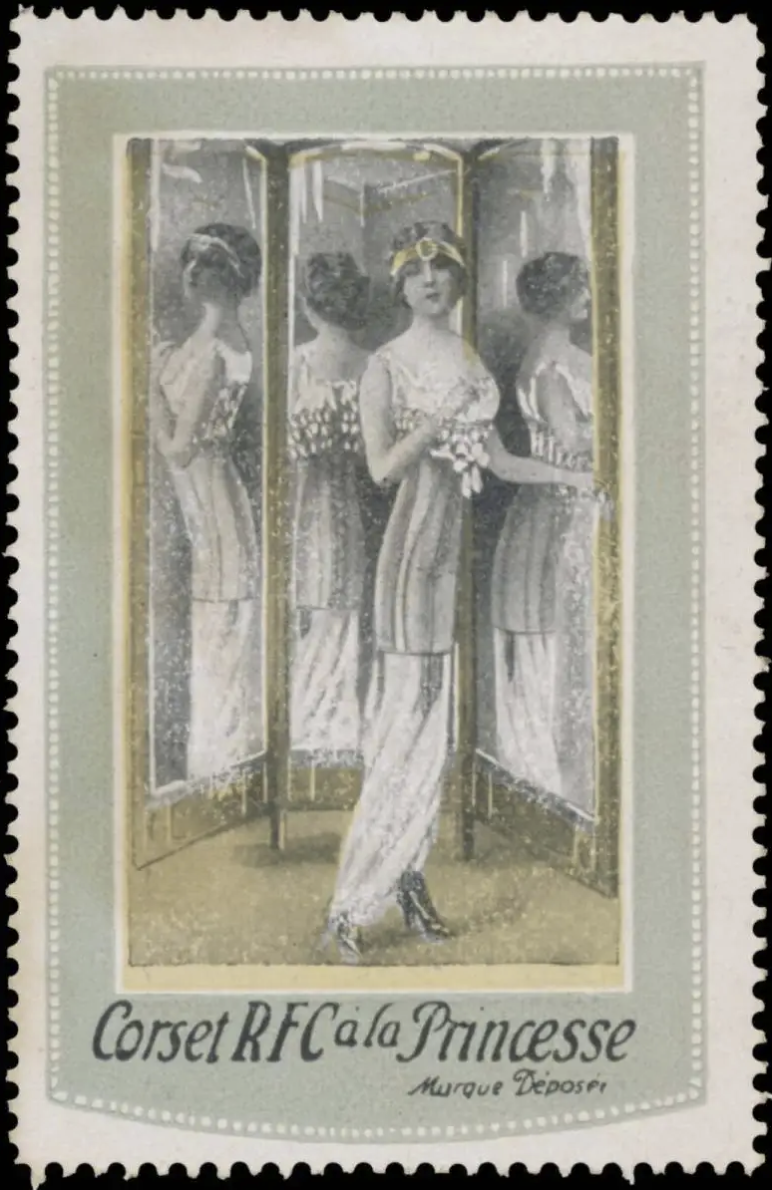
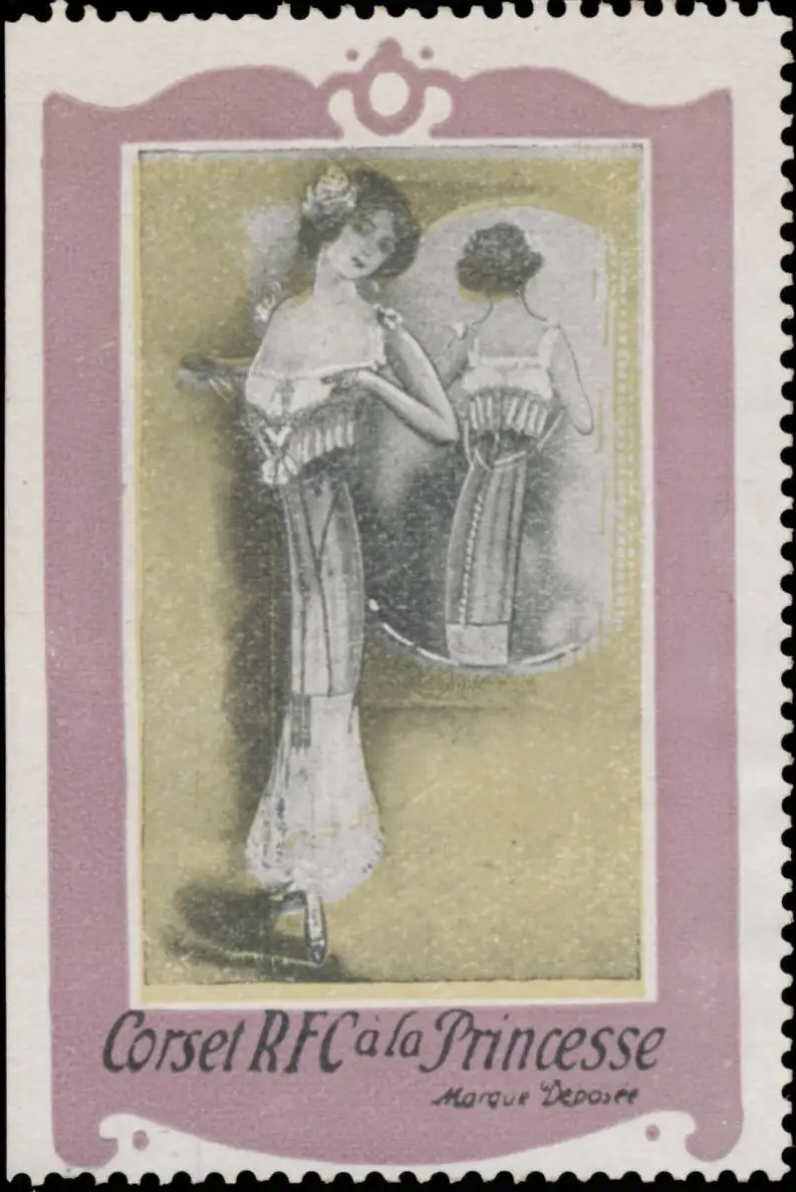
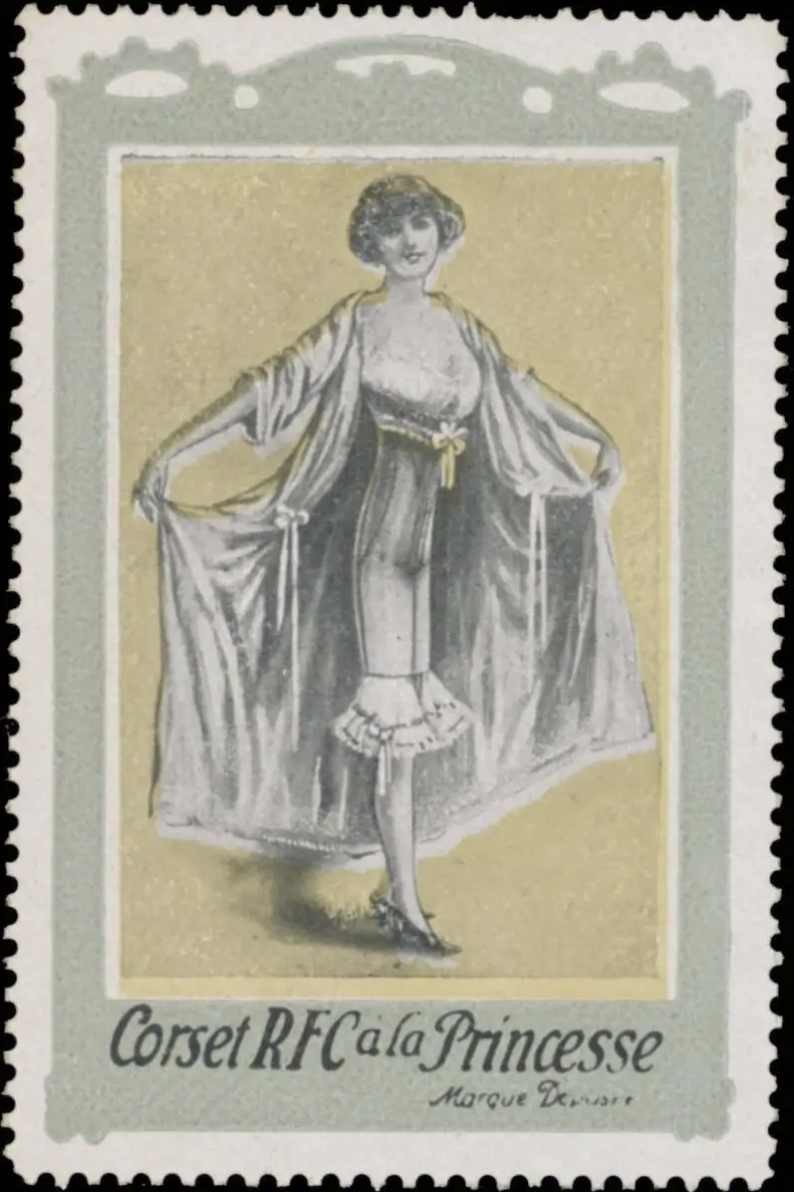
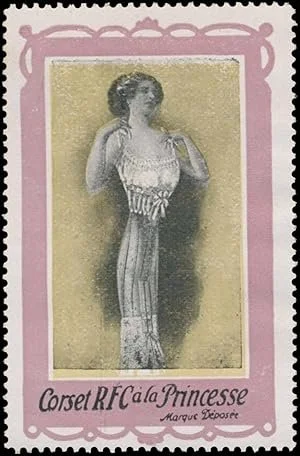
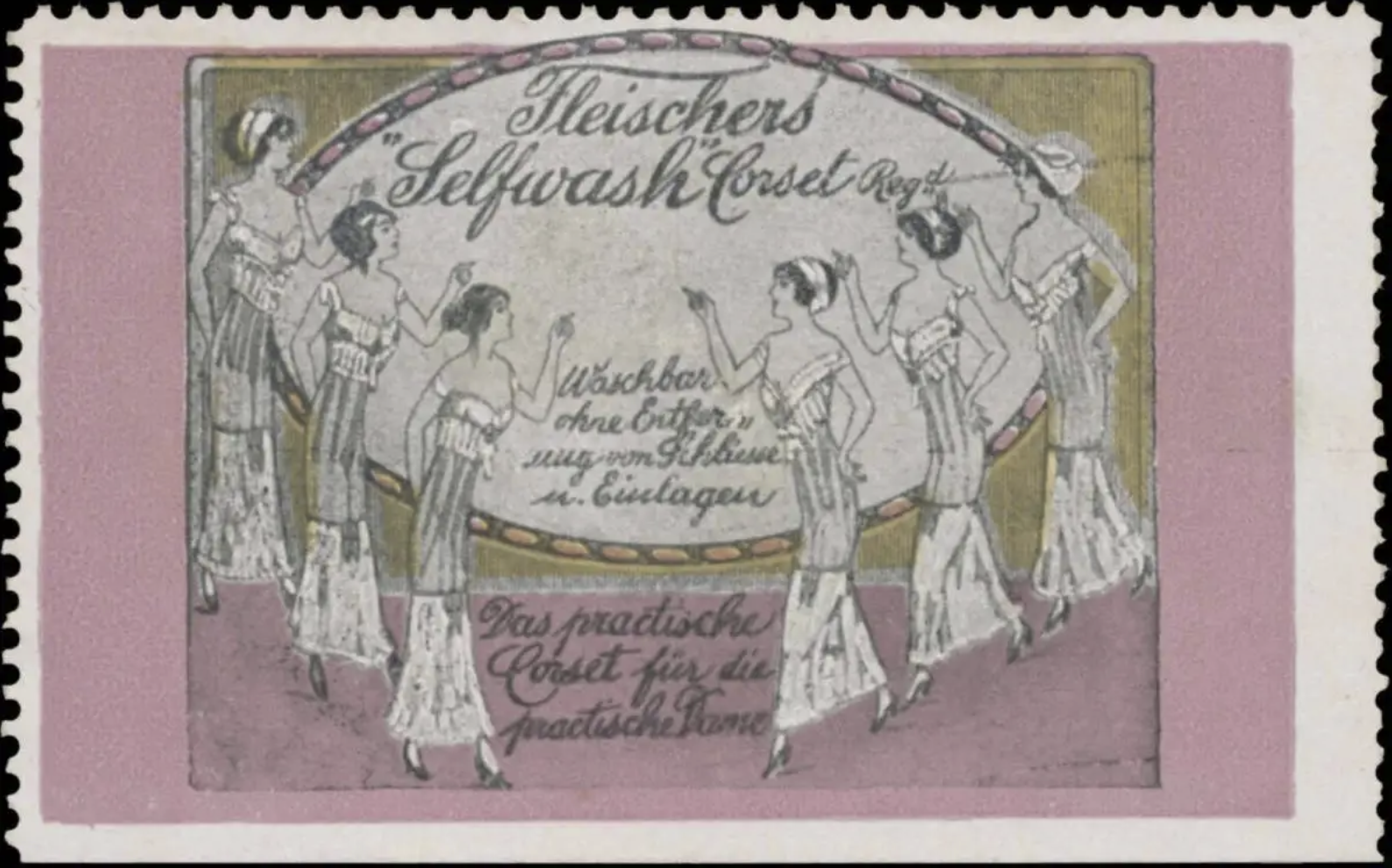
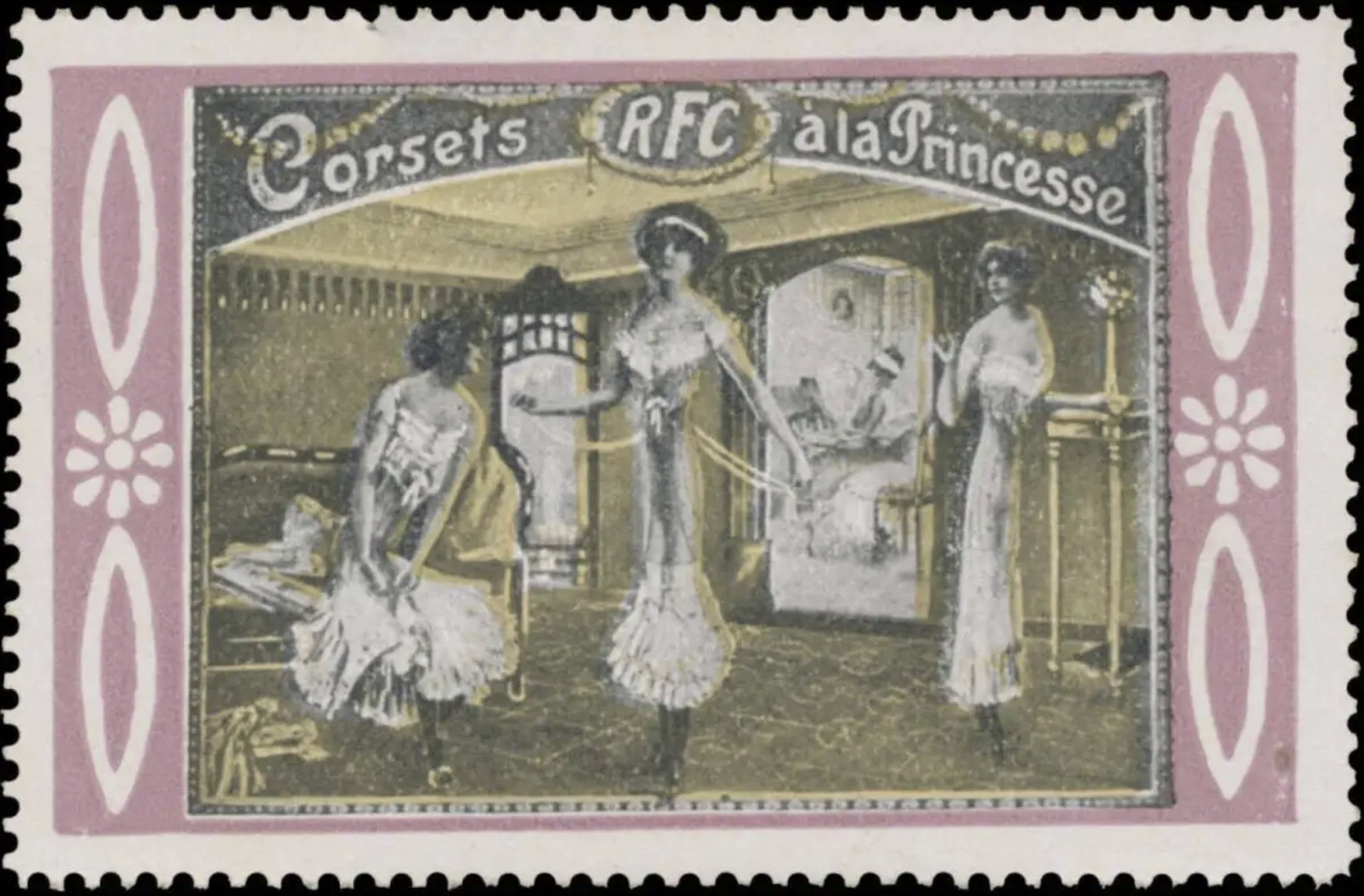
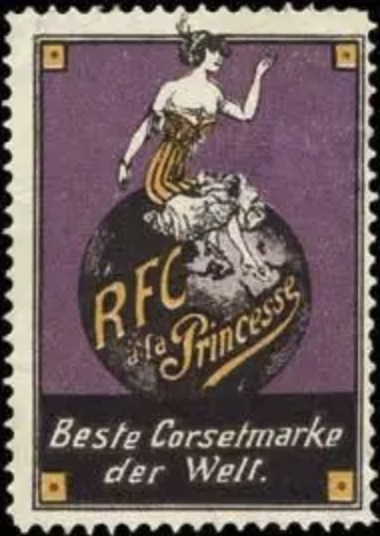
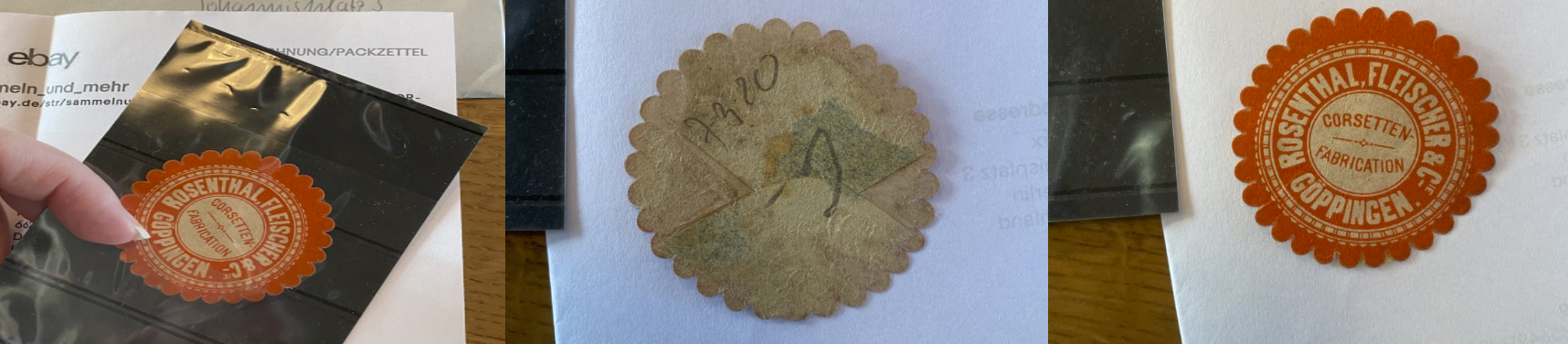
In a time before Instagram or Facebook, advertising took the form of promotional stamps - small, colorful labels designed to market products and linger in the public imagination.
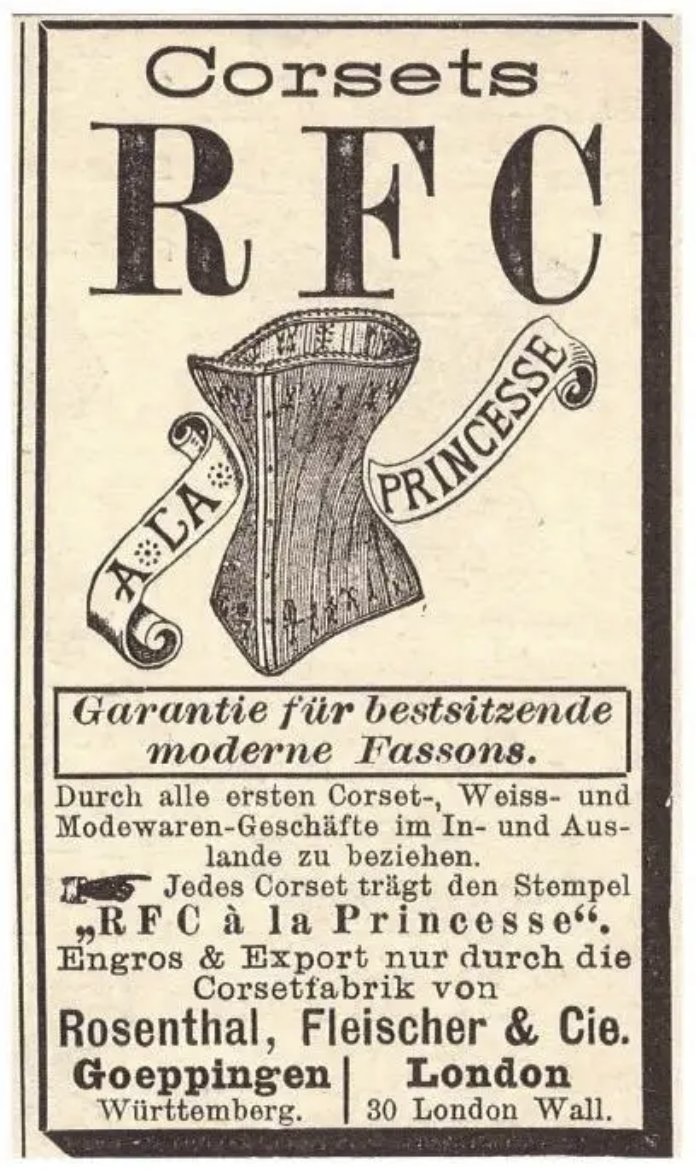
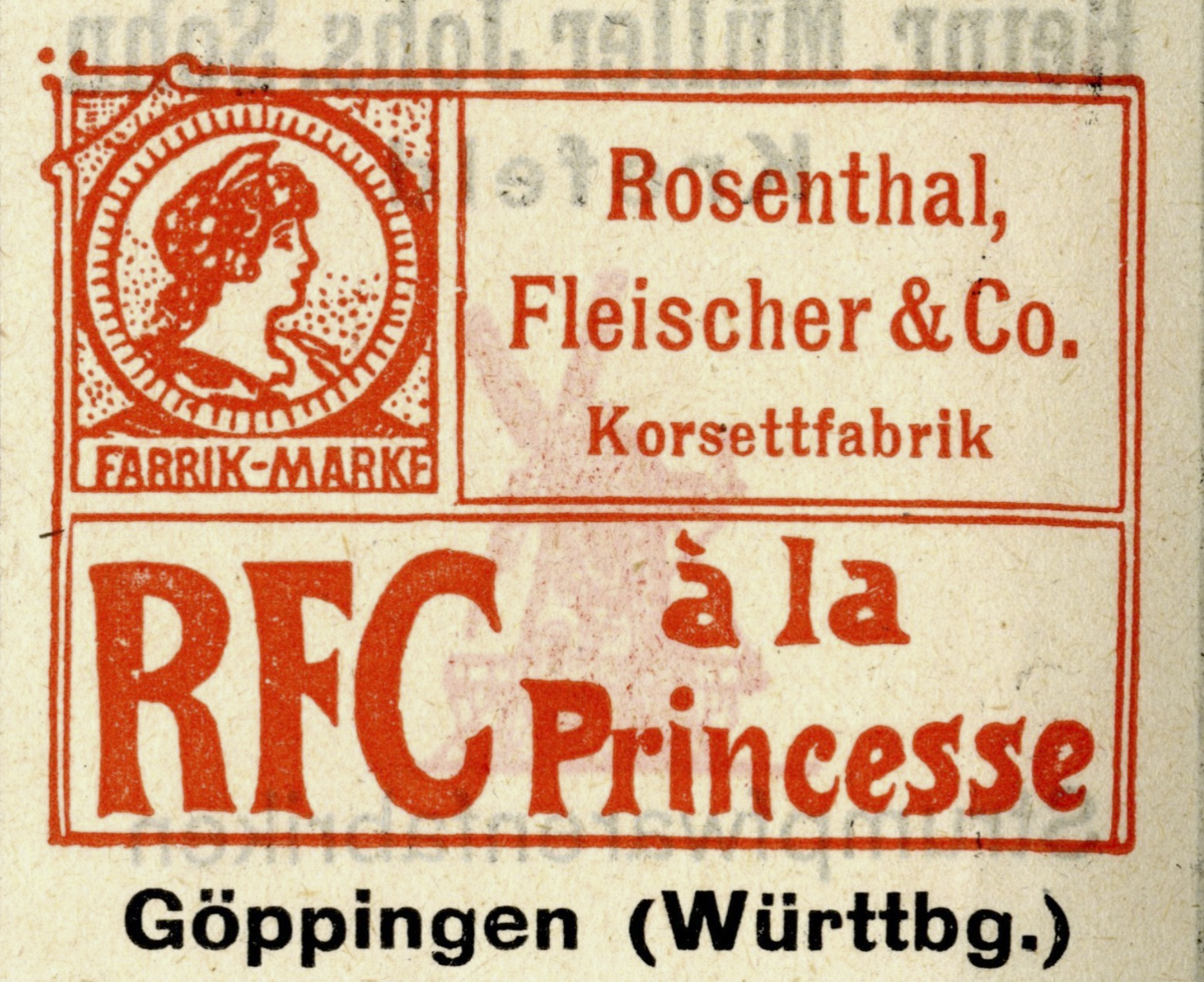
The Fleischer & Rosenthal corset factory made use of such stamps as well, including those for RFC à la Princesse, one of the company’s corset lines.
I haven’t found an exact production date, but based on similar items sold on various sites, they were most likely printed between 1910 and 1920. These beautifully designed stamps, created in the aesthetic language of their time, presented the corset as a symbol of quality, luxury, and femininity.
It is a small object, but it tells a large story -
of industry, fashion, international marketing, and above all, of a world that has disappeared.
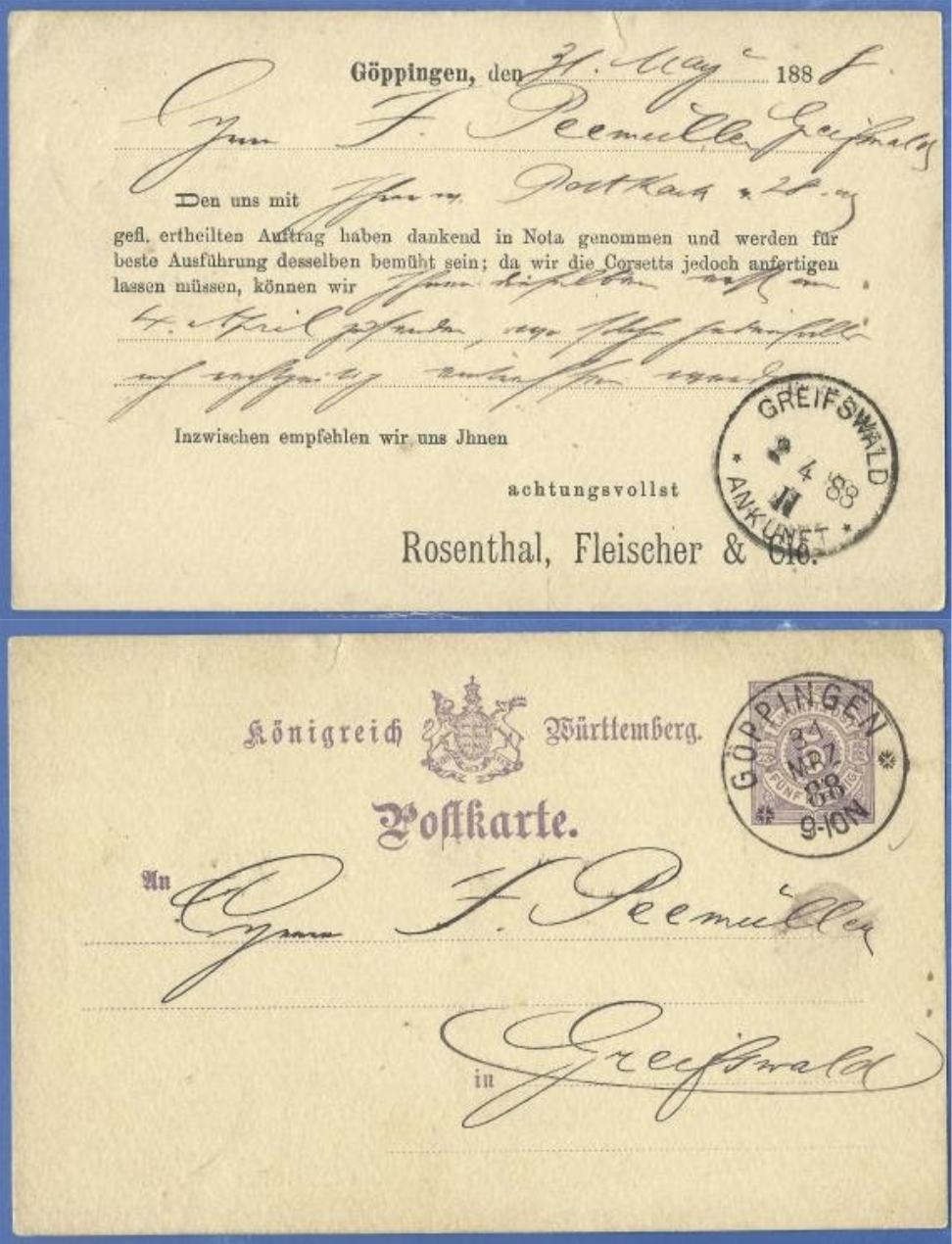
In recent weeks, I have been searching for the stamp collection, for every fragment of archival material — postcards, envelopes - and I bought what I could find, including a single label that surfaced in a private collection in Germany.
The story of Göppingen’s Jewish community is woven from many threads - entrepreneurship, a close-knit family, hard work, and big dreams.
Next week, we’ll open another door in this story and take a closer look at the lives of the founders, their children, and the generations that followed.
