The First Marx
Where did the name Marx come from?
Willkommen!
Long before the Marx family became one of the Jewish industrial families of Bad Cannstatt, and before family members became involved in the textile industry and the life of the city, the family story began somewhere very different.
Earlier generations lived in small villages and towns in southern Germany, including Mühlbach near Eppingen and Sinsheim, long before the family eventually settled in Bad Cannstatt. At the time, Jews could not simply choose where they wanted to live. The right to settle in a particular place often depended on permission from the local authorities and on a status known as
Schutzjude — a “protected Jew.”
The term may sound as though it meant protection in the way we understand it today, but the reality was more complicated. A “protected Jew” was a Jewish person who had been granted permission by a local ruler to live in a particular place, often in exchange for a fee. In many places, Jews also needed a Schutzbrief, a letter of protection that defined their limited rights - where they could live, what kind of work they could do, and sometimes even whether they were allowed to marry and start a family.
Long before freedom of movement and the opportunities that opened up to later generations, the family had to learn how to build a life within boundaries set for them by others.
When we trace the family tree far enough back, we reach one of the earliest ancestors we know to carry the Marx name: Suessel (Jischai) Marx.
But where did the name Marx itself come from?
One theory about its origin among Ashkenazi Jewish families takes us back to the Hebrew name Mordechai. Marx, associated with the German form of Marcus, was sometimes used as a secular equivalent of Mordechai. As permanent surnames gradually became part of civil life - and were sometimes required by law - a name that once belonged to an individual could eventually become a family name passed down from one generation to the next.
We cannot know for certain whether this is how our own branch received the name Marx, but the possibility raises an interesting question.
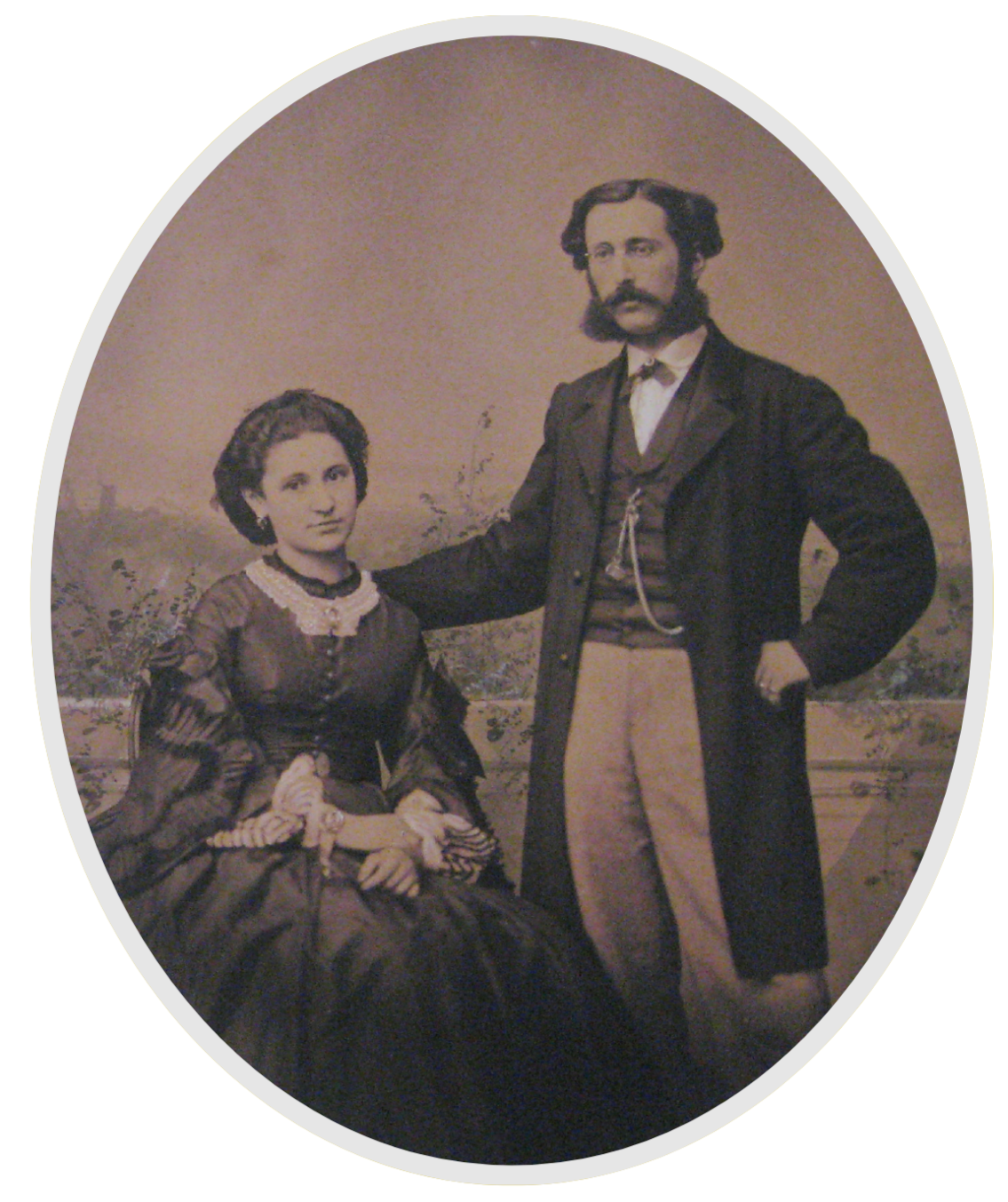
Leopold Marx and his wife, Mina Maria (Michal) Fleischer, Marx’s paternal grandparents.
c. 1850
The Marx line, however, is only one side of the story.
One of the earliest visual records we have of the family is a lithographic portrait of Leopold Marx and his wife, Mina Maria (Michal) Fleischer. Through Mina, we can trace another branch of the family even further back. Her Fleischer ancestors can be traced through our family records to Mühlbach as far back as 1690.
Jewish life in Mühlbach is documented as early as 1714, when only two Jewish families were recorded in the village. By 1815, four Jewish families were named there- three of the four carried the surname Fleischer.
The name Fleischer means “butcher” in German, originally referring to the profession of preparing and selling meat. Like many family names that developed from occupations, it eventually became a surname passed down through generations.
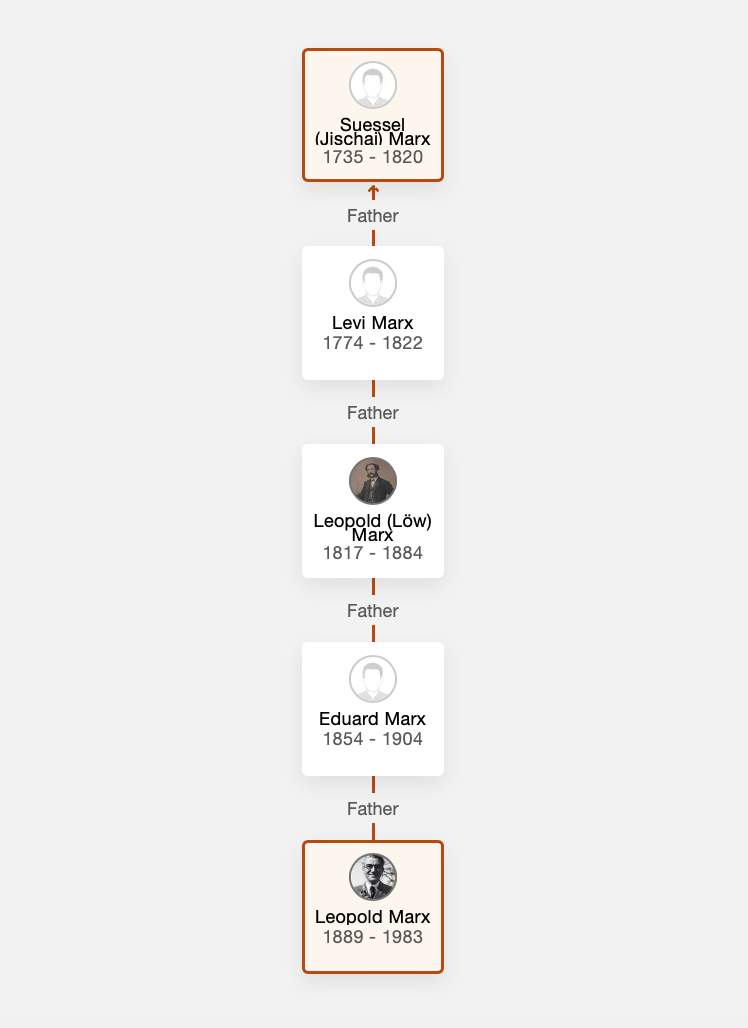
The first Marx
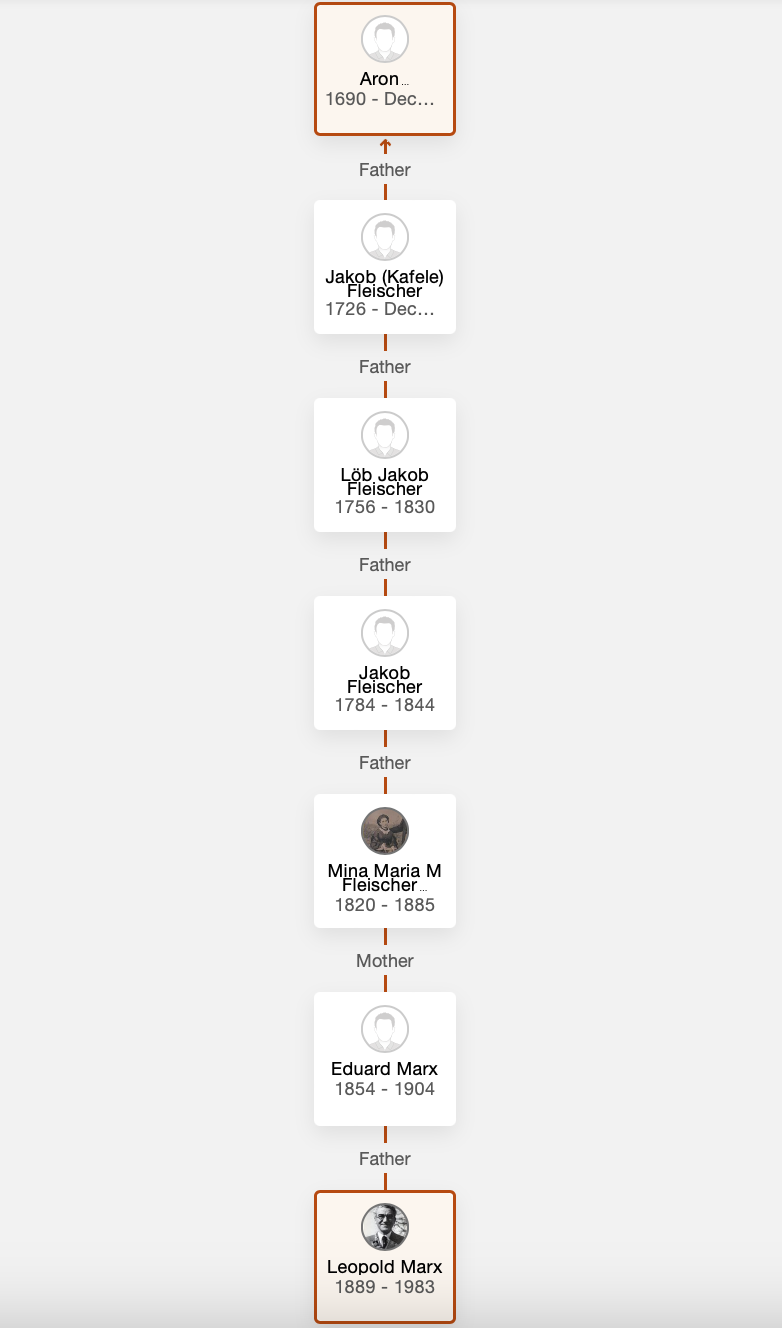
The first Fleischer
Today, at a time when biblical names are becoming popular again and many people are looking for ways to reconnect with their roots, it is interesting to ask the opposite:
If every name carries meaning, what remains within a name that has been passed down for hundreds of years?
Does it carry something of the fear, secrecy, or shame that came with the need to survive? Does it remind us of a time when a family had to adjust to a reality that did not always allow them to choose freely?
Or perhaps we can look at it in exactly the opposite way - as a symbol of the ability to begin again. A name that travelled with the family as they moved from small villages to cities, built businesses, created homes, formed new connections, and opened possibilities for future generations that their ancestors could hardly have imagined.
Perhaps, in the end, a family name carries both: what had to be endured, and what managed to grow from it.
But one thing is certain- they could never have imagined that generations later, we would still be tracing their stories and discovering the effect their lives left behind.
Sometimes we go through entire lives caught up in the everyday, without stopping to think about how far we have already come. What have we built? What have we achieved? Which decisions changed the course of our lives- and what will continue to live on after us?
Which stories will be told about us? Which values will we pass on? And which choices we make today will still affect people who have not even been born yet?
Perhaps that is the question at the heart of The Marx Effect.
Over the coming months, we’ll discover who the first merchant in the family was and what other businesses the family built. We’ll meet the “Rich Onkel” who helped so many family members, including sponsoring visas to the United States.
We’ll also discover our family’s personal connections to the founders of Bosch and Mercedes-Benz, who built the family’s large house in Bad Cannstatt, where dreams and plans for the future never came true, and who was the former Nazi officer who returned decades later to ask the family for forgiveness.
Each of these stories is another piece of the puzzle.
Not only of who they were, but also of who we are today- and what of us will continue into the future.
That is The Marx Effect.
In the next chapter, we’ll move much closer to our own time and meet Leopold Marx - one of the family members closest to our generation, and the last in this family line to live his life in Germany.
