The year is 1916 - World War I is in full swing.
We ended the previous chapter with the story of Elisabeth - Leopold’s fiancée and first love. From her studies in Paris to her return to Germany, through all the different jobs she took on, Leopold was always her lifeline. Whenever she found herself in trouble, he used his connections, found solutions for work and housing, and supported her generously. But despite their great love, the distance between them continued to grow, and after Elisabeth confessed to several lies, their engagement was called off. Even then, Leopold did not abandon her and continued to support both her and her mother financially.
Their story, however, was not completely over. Its fate came to depend on one sign: the lucky four leaf clover. Leopold decided that if his brother Julius returned safely from the war with the clover still in his possession, it would be a sign that he and Elisabeth were meant to find their way back to each other.
But fate had other plans. Just two days before “the sign” returned safely, Leopold met Judith. From the very beginning, she impressed and intrigued him, and they felt an immediate and deep connection. Within only a few weeks, they were engaged - and Elisabeth, his first love, wished them happiness and gave them her blessing.
At the very moment when Leopold should have been the happiest man alive, he began to struggle with intense feelings of survivor’s guilt. The brighter life became for him, the more it weighed on him. While his brothers and friends were fighting at the front, he had found new love. Leopold felt guilty - even arrogant - for having tied his brother’s fate to his relationship with Elisabeth. He also could not escape the thought that he had been too harsh with Elisabeth and had not known how to forgive.
The guilt became heavier and heavier until Leopold finally decided, in his own words, “to gamble with his life.” He asked to take his brother’s place at the front.
And his request was accepted.
Leopold wondered whether God would one day make him repay, “with interest,” all the good fortune he had received in life.
He still had no idea what was waiting for him.
How would this love story between the three of them end? How and when would Leopold return from the front? And would he, as he feared, truly receive his “punishment”?
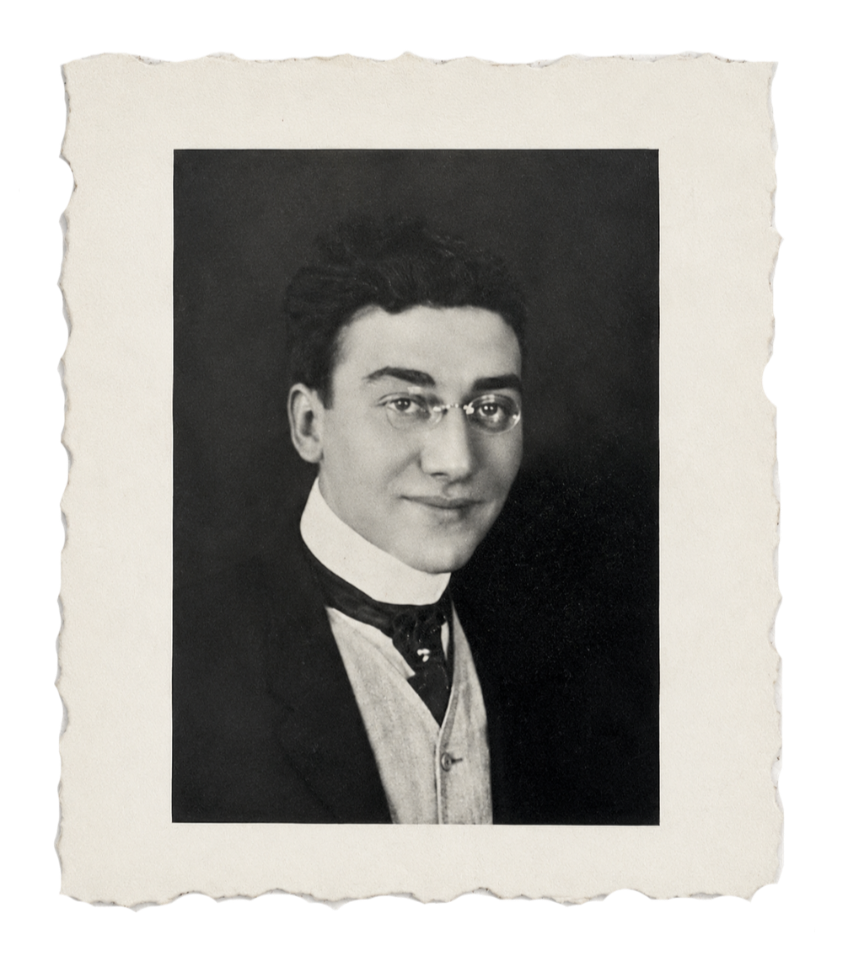
It’s Wedding Time
Leopold and Judith’s sudden engagement, along with the knowledge that he was about to leave for war, worried Judith’s aunt. She tried to persuade her to wait - first for Leopold to return safely from the war, and only then to marry him. But Judith did not follow her advice. Leopold convinced her, and the two decided not to wait: they would marry quickly, before he left for war.
Judith was a radiant bride, busy preparing their home and bringing warmth and happiness wherever she went. She looked forward to the wedding with excitement, while Leopold was already a soldier undergoing training at a military camp. He adjusted quickly to army life and even found a certain sense of relief in it. As a soldier, Leopold almost no longer knew the meaning of the word “nerves.” Instead of carrying responsibility, making decisions and giving orders - as he had been forced to do since he was far too young - he learned to obey. For once, he even enjoyed a life in which other people made the decisions and told him what to do. One weekend Judith came to visit her fiancé at the training camp, and the entire group of corporals was charmed by her.
While Judith and Leopold were preparing for their wedding, Elisabeth was preparing in her own way. Before the wedding, she wrote a letter to Judith. She wrote that she was glad Judith could give Leopold the happiness and healing that she herself had not been able to give him. She ended the letter with the words:
“I wished for you for him long before he ever knew you.”
Leopold and Judith were married at Easter and then left for a two week honeymoon. On one of the final evenings before his return to the army, they met with Elisabeth. All three knew that this meeting might be their last goodbye - perhaps forever.
They had hoped for an intimate and meaningful evening, but the meeting took place in a restaurant rather than at home, and by chance several acquaintances were there as well. The privacy they had hoped for disappeared, and the evening that was meant to be a deep and personal moment between the three of them did not go as planned. They left disappointed - especially Elisabeth.
Three weeks after the wedding, Leopold returned to the army and received an order to leave for the front. In his letters, he tried to encourage Judith and Elisabeth to build a relationship with each other even without him. In reality, however, it was not so simple. They rarely met, and the letters they exchanged remained cold.
Elisabeth had hoped that a closer friendship would grow between them, but she began to feel that Judith did not really need her. Judith had her own friends and her own life, and Elisabeth began to feel like she was no longer needed. When Judith sent her the monthly allowance Leopold had usually given to people under his care, something in Elisabeth broke. She wrote openly about her loneliness, about not knowing what to do with all the love she still carried inside her - and even admitted that she had begun to feel jealous of Judith.
Leopold’s mother also struggled with the situation. She had already tried in the past to separate her son from Elisabeth, and now found it difficult to accept the complicated bond that still remained between them. She saw Elisabeth as the woman who had “stretched Leopold too far” and hurt him, and she also disliked the fact that her son’s financial support was now being passed to Elisabeth through Judith.
But as the fear for Leopold’s life grew, the relationship between Judith and Elisabeth began to warm. Their shared concern for the same man slowly brought them closer.
Now they were both waiting for the same thing: for Leopold to come home safely.
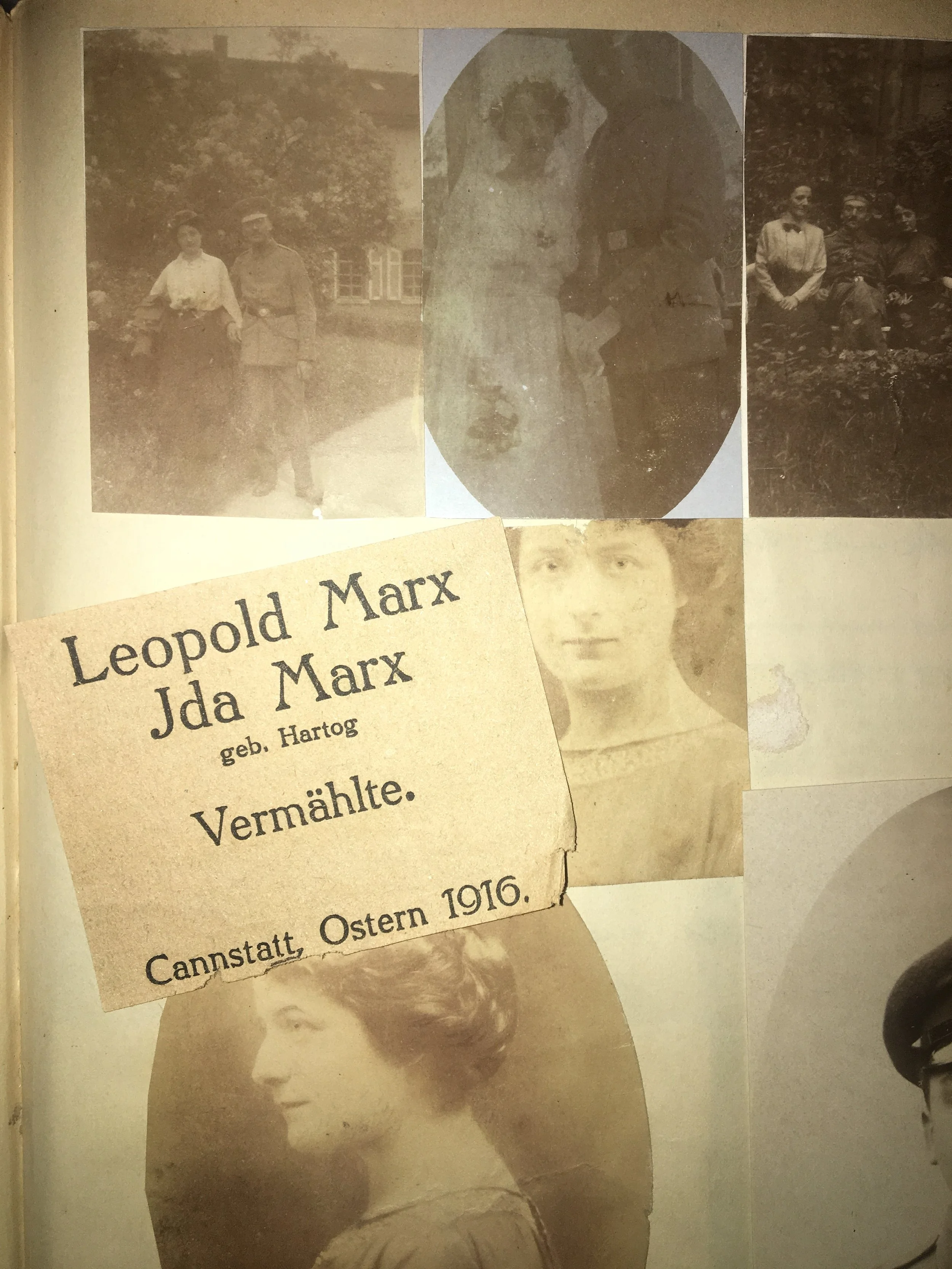
Wedding photos from Leopold’s personal diary
The Best to the Front - Génermont, Somme
By 1916, World War I had already entered its third year. In the autumn of that year, Leopold arrived at the Somme front in France. When Judith learned where he had been sent, she went to Elisabeth herself to tell her.
To understand where Leopold had been sent, it helps to understand what was happening on the Somme during those months.
The Battle of the Somme began on July 1, 1916, when British and French forces launched a major offensive against the Germans. The attack was preceded by seven days of heavy artillery bombardment, during which the British fired more than 1.5 million shells. Many mines were also placed beneath the German front line.
For months, German soldiers had dug their positions deep into the ground — work Julius had also taken part in earlier. These deep shelters allowed the soldiers to hide during the bombardments.
The British had launched the offensive, but they were the ones who suffered enormous losses on the very first day: 19,240 killed, 35,493 wounded, 2,152 missing and 585 taken prisoner. The losses were especially severe among officers, whose uniforms made them easier to identify, and German soldiers had been trained to recognize them.
July 1, 1916 is still considered the deadliest day in the history of the British Army. The German side also suffered thousands of casualties. The battle left behind tens of thousands of soldiers whose burial places remain unknown and became one of the strongest symbols of the horrors of World War I. Over the years, many memorials were built for the fallen, and numerous documentaries were made about the battle, many of which can still be found today on YouTube.
Among the hundreds of thousands of soldiers who fought on the Somme was a German soldier who was still unknown to the world at the time - Adolf Hitler. He served in the 16th Bavarian Regiment. On October 7 (somewhat ironically…) - Hitler was wounded in the thigh by shrapnel and evacuated to a hospital in Germany.
The offensive failed to break through the German line as planned, and the battle continued for more than four months. By the end, the two sides together had suffered more than one million dead, wounded and missing. Despite the enormous cost, there was no clear victory. The British and French managed to push the Germans back only a few kilometers - around 8–12 km in parts of the front.
And now Leopold was there too - in the middle of that battlefield.
Shortly after arriving at the front, all contact with him was lost. For weeks, the letters sent to him went unanswered. The War Office told the family that there was no definite information about his fate, but added one deeply worrying sentence: “Captivity cannot be ruled out.”
In Génermont, a small village in the Somme region, a sugar factory had been turned into an important fortified position in the German defensive line. The industrial site had been adapted with underground bunkers, concrete walls and machine-gun positions.
The heaviest fighting took place between October 13 and 15. German military reports describe fierce close-range combat, including face-to-face fighting among the ruins of the sugar factory, under heavy French artillery fire. During the battle, French forces managed to break through the German line, enter the factory and capture positions inside it.
On October 15, 1916, in the middle of these battles, Leopold was cut off from his unit. Together with many other German soldiers, he was taken prisoner by the French - and listed as missing.
Only after a period of uncertainty did the first news from him finally arrive.
Leopold was alive - but he was a prisoner of war.
And from that moment, a long and difficult chapter began - one that would last for years.
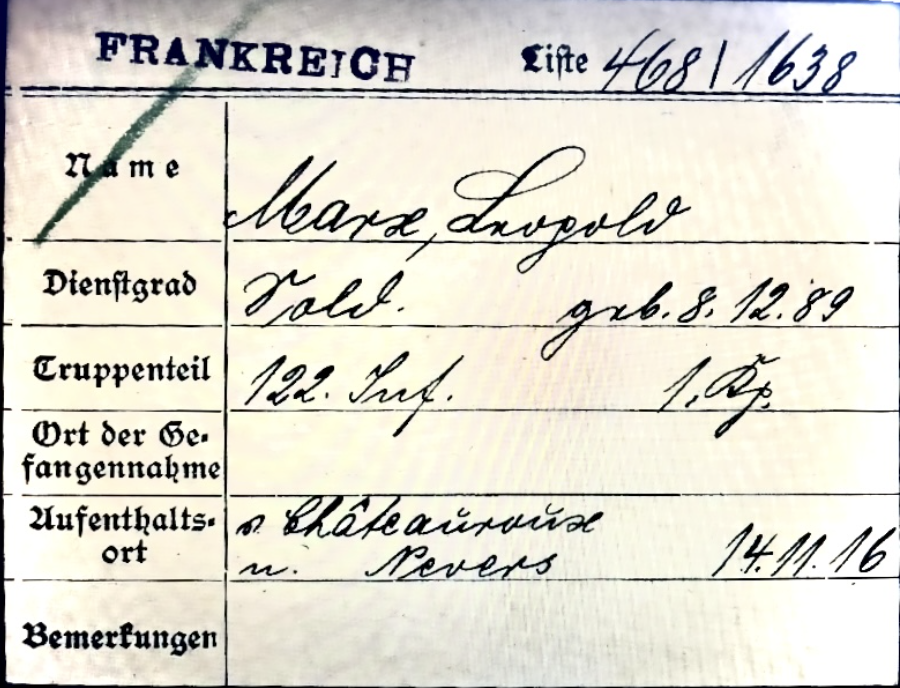
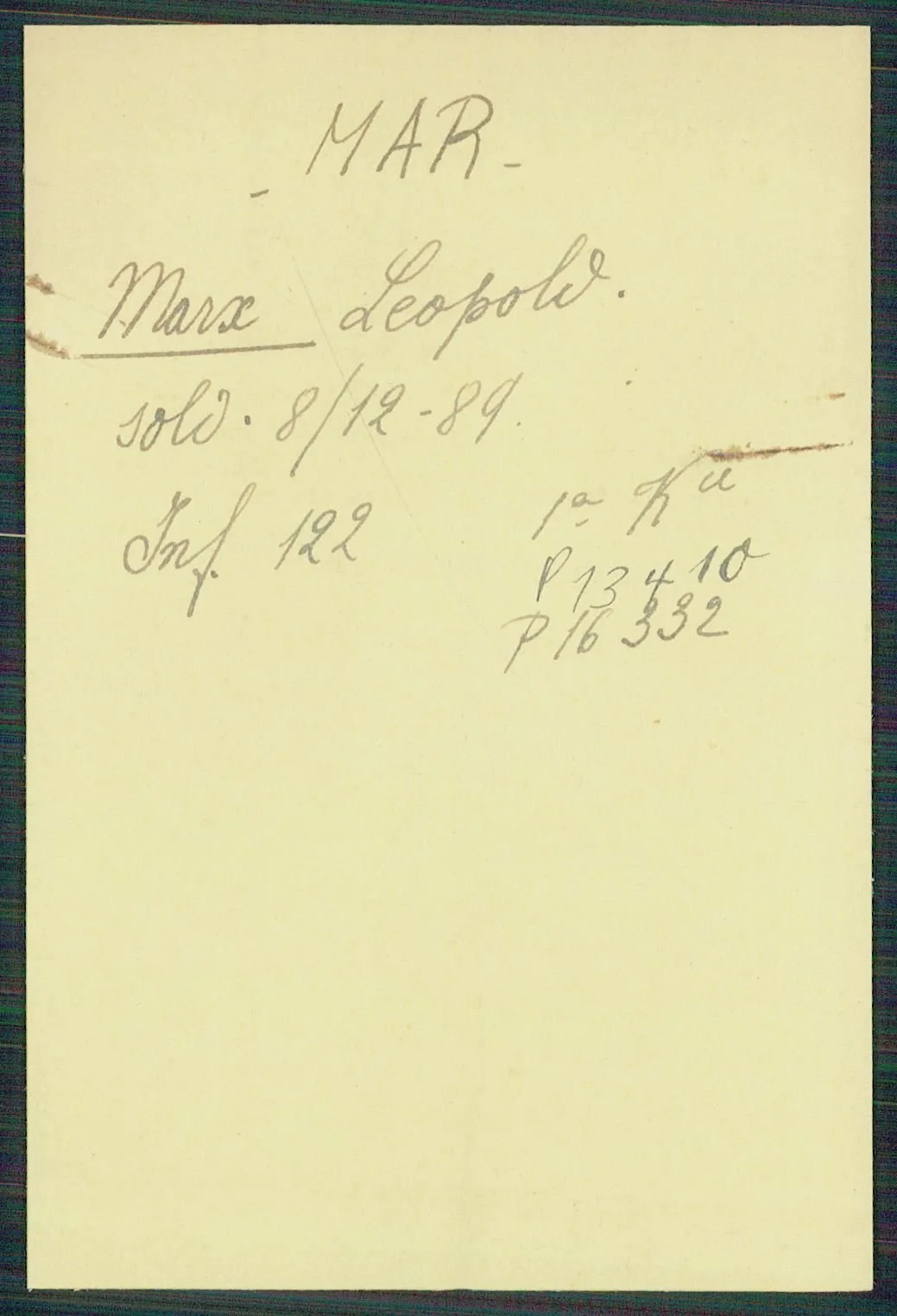
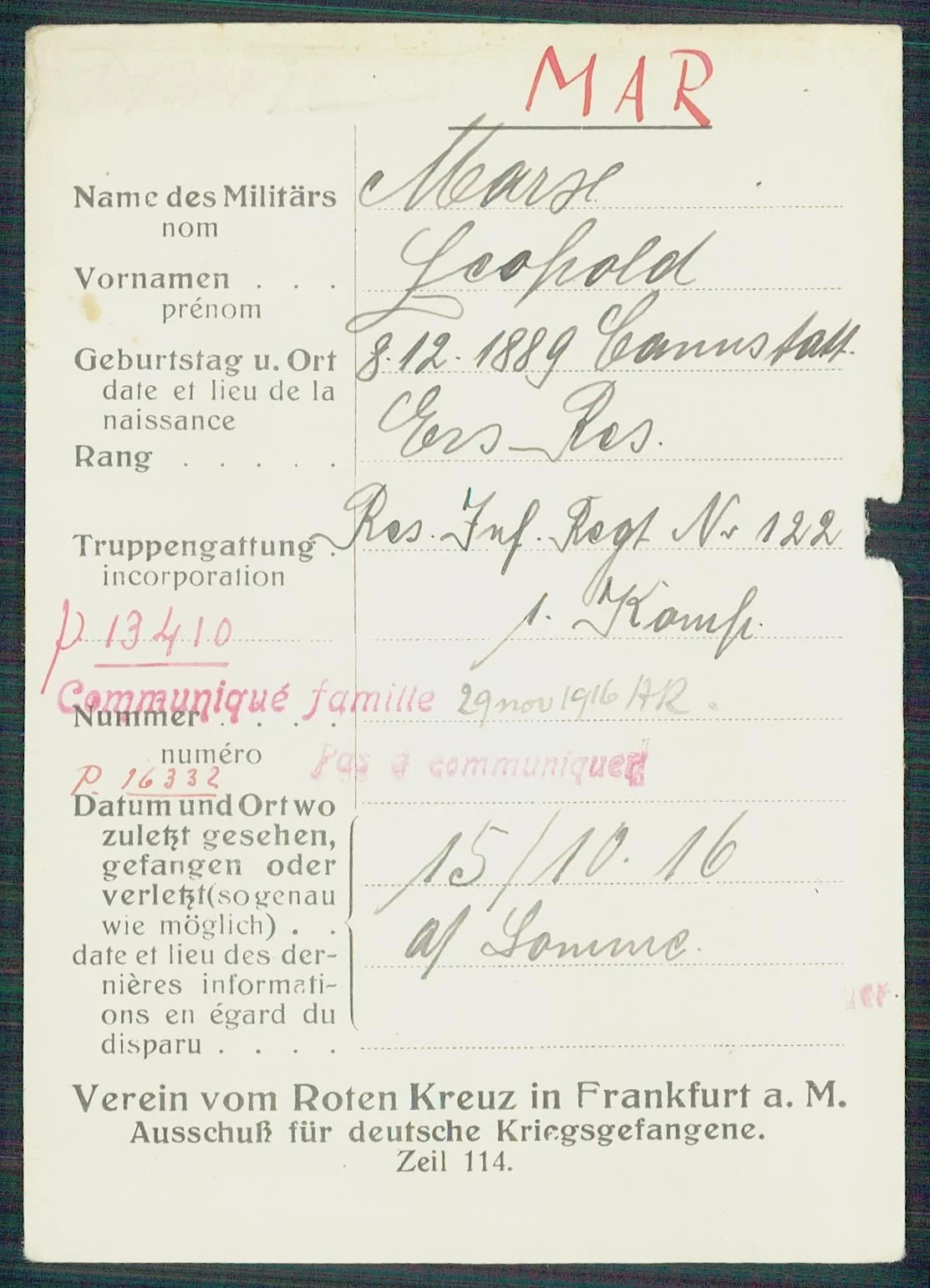
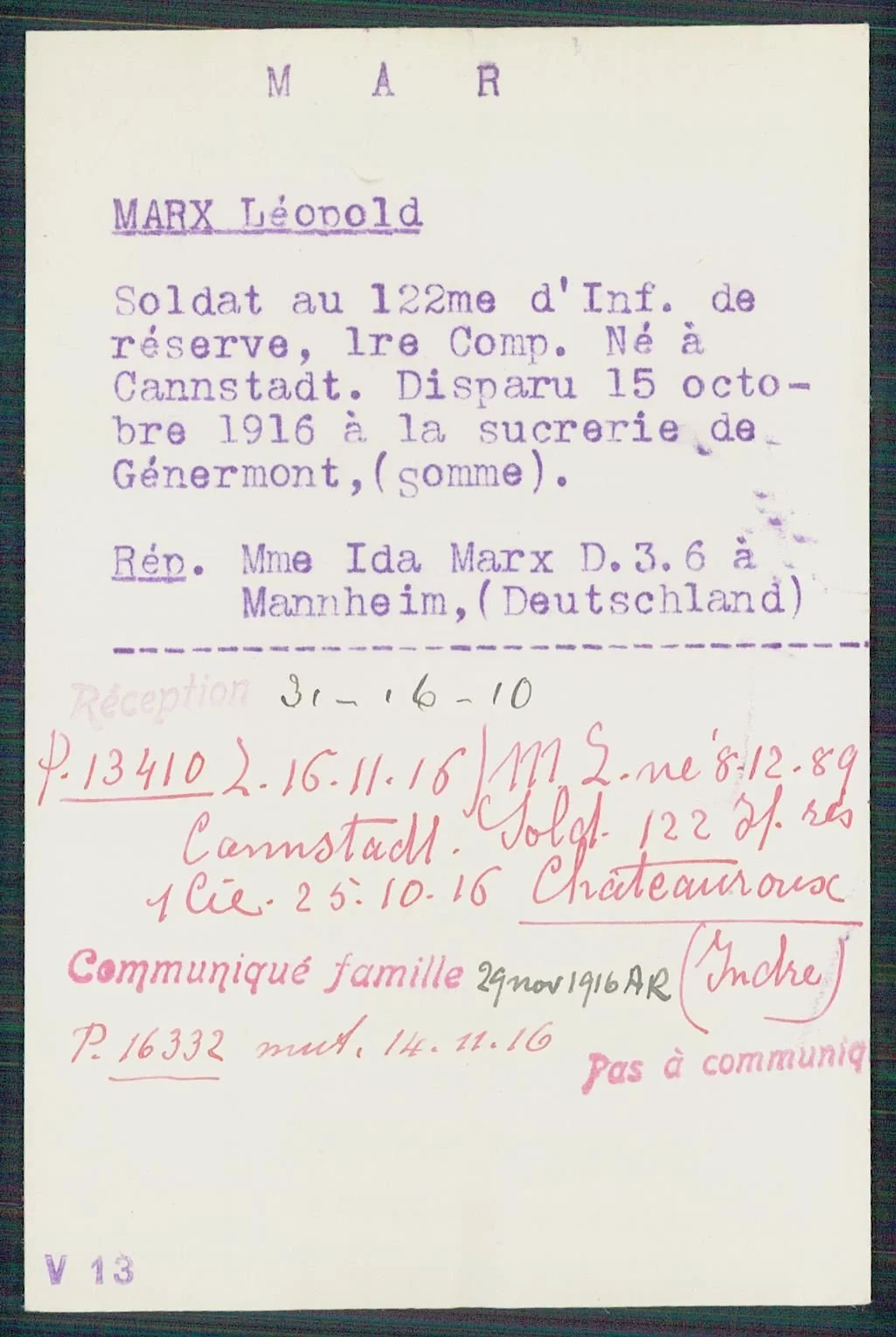
Records and Leopold Marx’s prisoner-of-war card - from the Red Cross website
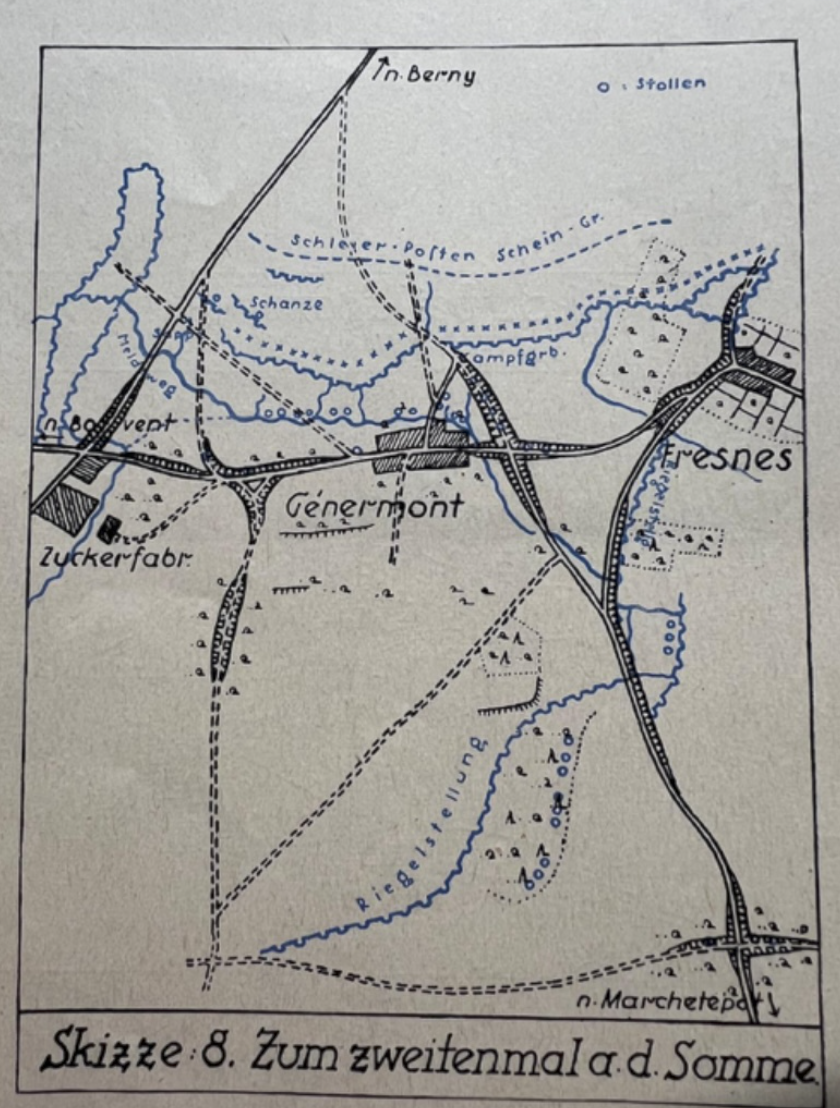
Map of the industrial area — showing the sugar factory area where the battle took place
Immediately after surrendering, the German prisoners were taken to temporary open-air “cages” a few kilometers behind the front line. There they went through initial questioning, medical checks and registration.
Early in his captivity, Leopold was separated from his friends and sent to one of the harsher labor camps. The camp was dominated by a German prisoner from Leipzig who had made himself useful to the French authorities and, through that, gained considerable power over thousands of other prisoners - power he abused. He had influence over work assignments and kept the better positions for those close to him. He seemed to enjoy having control over people who, in daily life, might never have paid him any attention. Intellectuals and independent-minded men who were not “easy to control” were sent to the hardest and most humiliating jobs - coal mines, notorious factories and remote labor camps.
And that was Leopold’s fate as well.
For more than a year, Leopold remained in a place he later described as a “corridor to hell.” The prisoners worked around ten hours a day, even in rain, storms and snow. The work at least helped break the boredom and allowed them to earn a small amount of special “camp money,” which they could use to buy cigarettes and hygiene products. But most of the work itself was pointless - moving piles of military equipment from one place to another again and again, simply to fill the required working hours.
At night they slept in miserable barracks, exposed to the wind and almost impossible to heat. Food was limited, and there was a feeling that only a small part of the money intended to feed the prisoners actually reached them. Worst of all was the cruelty and mockery of those in power and of the guards, making captivity even harder. For Leopold, the mistreatment was also direct and personal.
He especially remembered a short guard who walked with a limp, whom he later called “the limping devil.” On one occasion, while Leopold was once again being held in a punishment cell, the guard kicked away his only piece of bread and threw it onto the floor to humiliate him.
Back home, almost no one knew how difficult his situation really was. Leopold tried to make his letters sound as comforting as possible and avoided revealing the full depth of what he was going through. Letters and packages from home were among the few things that helped sustain him during this period.
Meanwhile, Judith and Elisabeth couldn’t do anything but comfort each other through letters. Faced with their shared fear for Leopold’s life, the tensions between them disappeared.
Through her work as a home-care nurse, Elisabeth entered some of the poorest households. She read letters from the front in which husbands described fear of death, anger, hatred and despair, and she saw suffering up close- women who had fallen into alcoholism, neglected children and filthy homes.
After about a year of Leopold’s captivity, in October 1917, his younger brother Julius enlisted again - this time for promotion and a different role, after having been badly wounded in the arm during his first period of frontline service. Their third brother, Alfred, volunteered for military service as a telegraph operator and later served in the army’s communications unit and at a listening station.
It’s hard to imagine what their mother went through during those days.
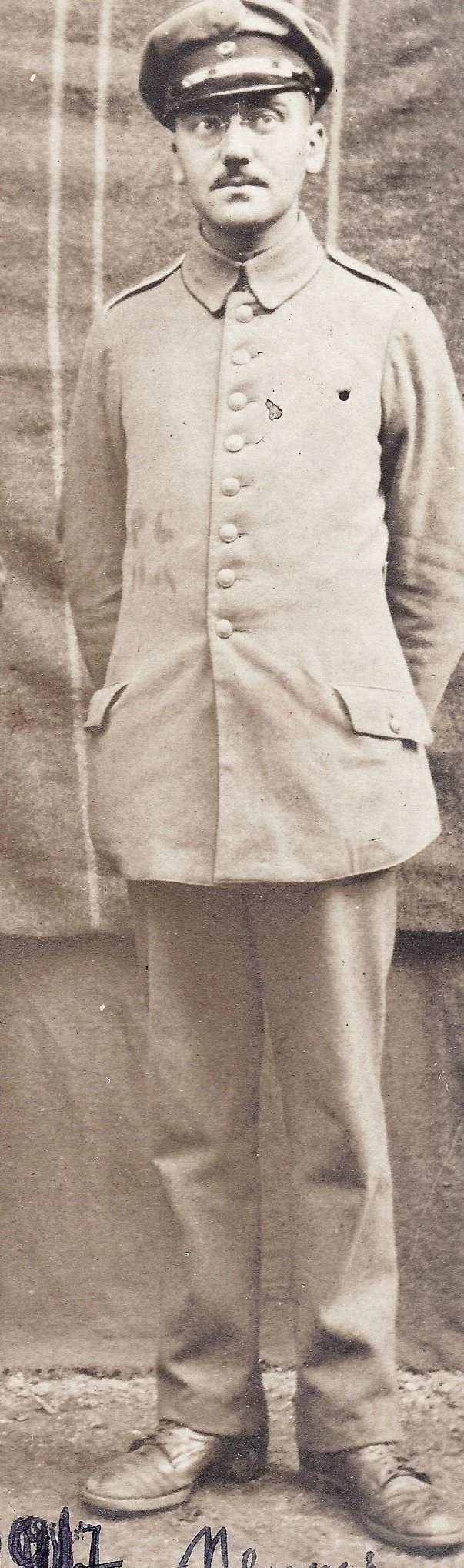
Leopold Marx - 1917
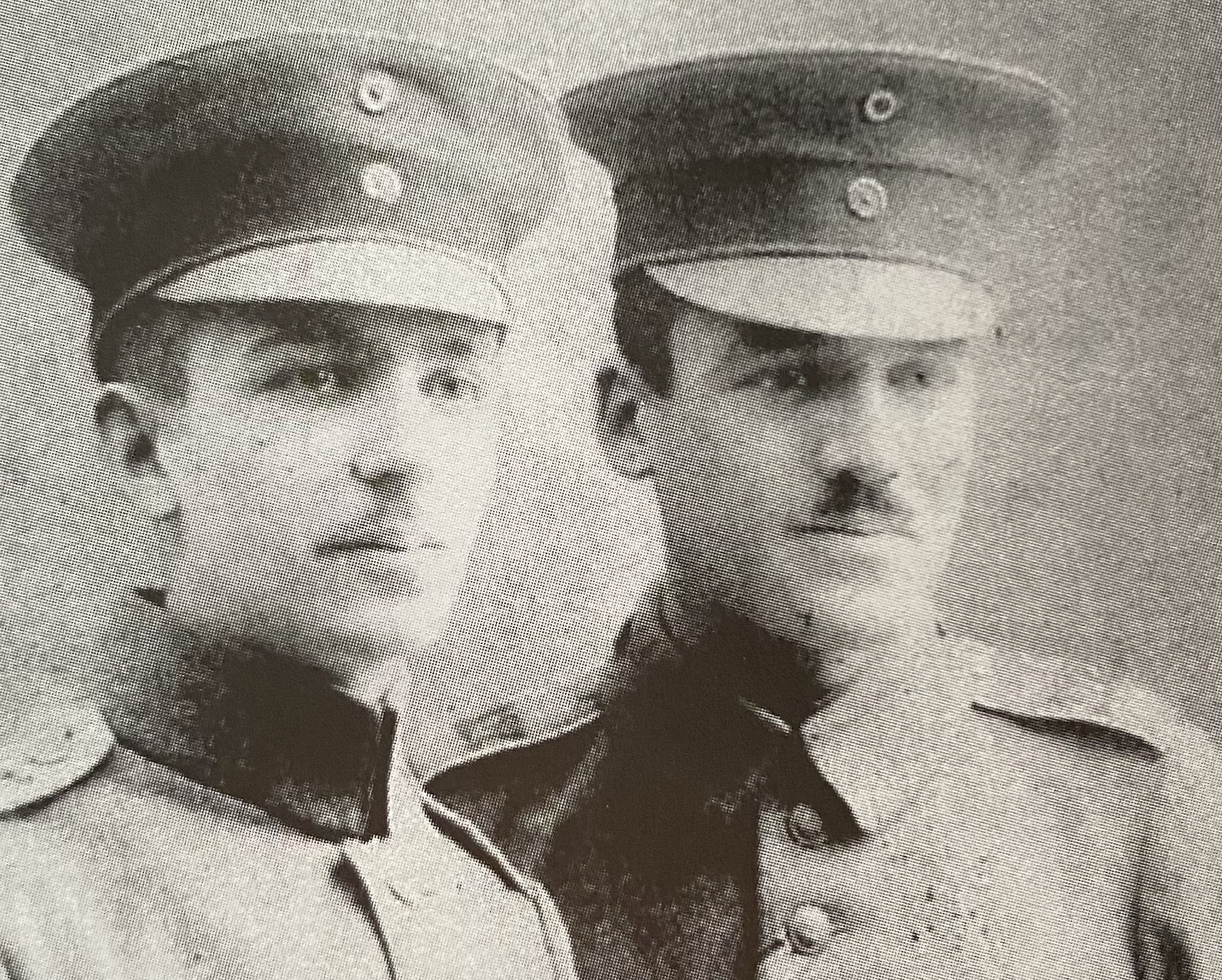
The younger brothers - Julius and Alfred
At the beginning of 1918, Leopold’s situation in captivity finally began to improve. A persistent wound required better treatment, and the doctor ordered that he be transferred back to the main camp. In that sense, “luckily” for him, the hardest part of his captivity came to an end.
The new camp, located in an old town on the Loire River, seemed almost like paradise compared with the labor camp he had left behind. The treatment was still authoritarian, but much less harsh. After recovering, Leopold worked with a group of prisoners unloading hay for American soldiers who had arrived at the camp. Because of his language skills, he served as an interpreter between the prisoners, the French and the Americans, and even gained the trust of an American supply officer from Ohio. That connection allowed him to obtain certain small privileges for his group of prisoners.
But Leopold’s overly friendly relationship with the Americans did not please the French, and this more comfortable period ended quickly. He was sent back to road work and railway maintenance, and at one point again to hard forced labor. Ironically, an accident improved his situation: Leopold was injured and transferred to a hospital, where he spent several weeks in better conditions. He read, wrote and rested, and during that period made contact with a neutral aid organization that later helped him obtain a better position in the camp.
After recovering, he was given work in the camp’s postal service. There he discovered Red Cross packages that had been hidden and never distributed to the prisoners. He confronted the man who controlled the prisoners’ work assignments, and as punishment was sent to do agricultural work in a village.
For the first time in nearly two years, Leopold saw beautiful scenery again- villages and fields, and felt a certain sense of freedom. But after eight days, a threshing machine was brought in, the working hours were extended unfairly, and the prisoners protested.
During the confrontation, one of the guards shot and killed a German prisoner, even though there appeared to be no real reason for the shooting. Leopold, who was serving as an interpreter and witnessed the incident, knew exactly what had happened. He later discovered that the official report had been falsified to make it appear that the guard had fired in self-defense.
After the incident, the guard escorted Leopold back to the camp. On the isolated road, he threatened him: if Leopold confirmed the official report, the guard would testify in his favor; if he refused, Leopold himself would face a military trial as the “leader of the revolt.”
Leopold refused.
He later said that he was surprised he made it back to the camp alive at all. As soon as he returned, he was thrown into solitary confinement for ten days, without any investigation. The military trial that might have exposed the falsified testimony never took place, and the guard who had killed the prisoner was never punished.
Leopold carried a heavy sense of guilt with him. He felt that his protest against the working conditions had indirectly contributed to the chain of events that led to his fellow prisoner’s death. He demanded to speak with the camp commander and tell him the truth, but the commander had little interest in hearing it and angrily dismissed him. Only years later did Leopold understand how deeply these experiences had shaped his general hostility toward the French people.
Even while he was alone in the punishment cell, his friends did not abandon him. They found a way to smuggle in food, books and even parts of the packages sent from home, using the waste bucket that was taken out of the cell and returned with small parcels hidden inside.
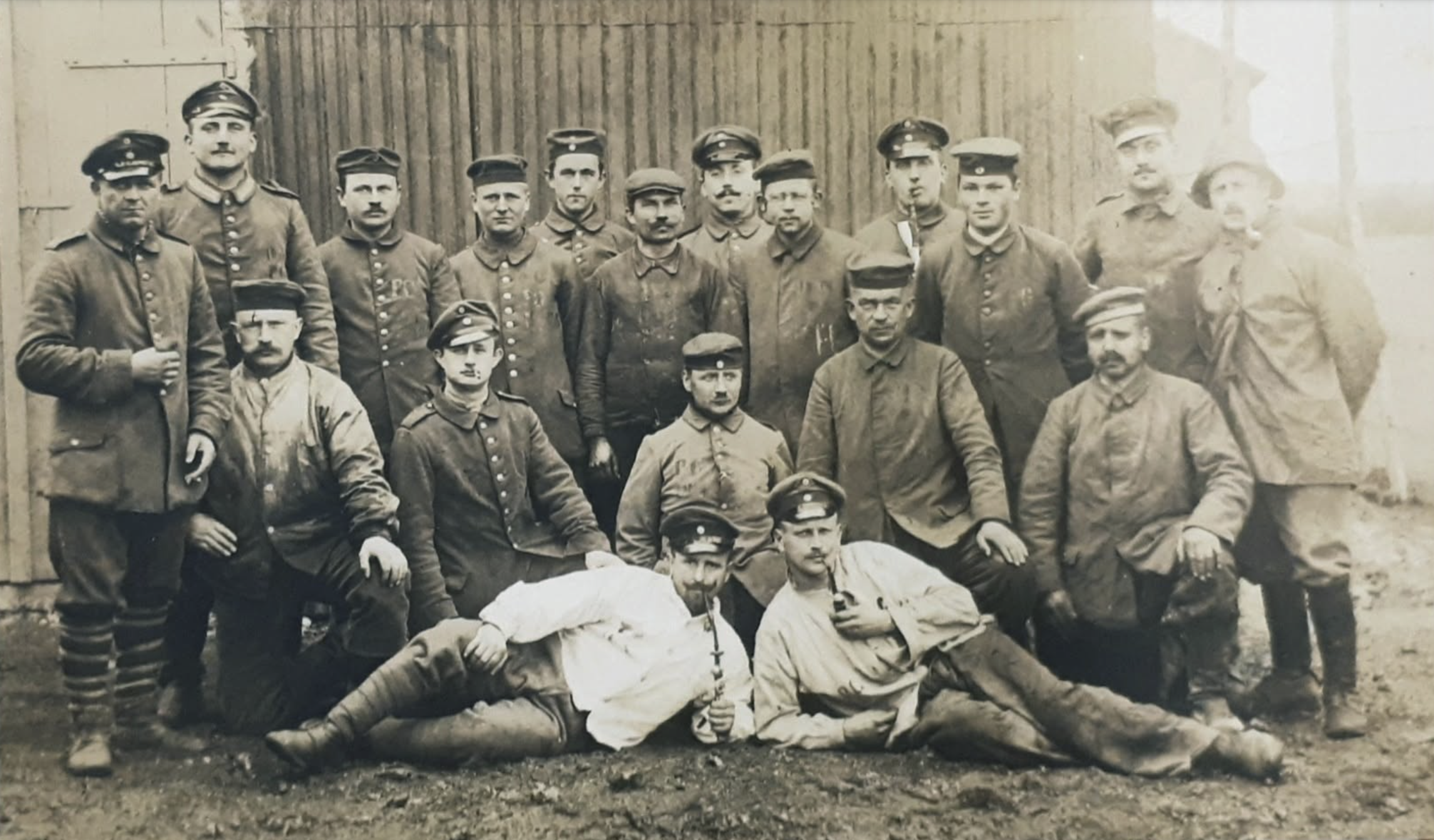
German soldiers in a French prisoner-of-war camp. Leopold Marx is standing in the back, second from the right. Notice the marking visible on some of the prisoners’ shirts: PG, short for prisonnier de guerre - “prisoner of war” in French.
Photo from the Shavei Zion Archive.
France was a signatory to the Hague Convention, and official representatives of the International Committee of the Red Cross, together with representatives of neutral countries such as Switzerland, visited prisoner-of-war camps in France. During these visits, they checked conditions such as food quality, sanitation, mail delivery and the treatment of prisoners.
Even so, communication with home remained very difficult. Letters could take weeks to arrive, and sometimes never arrived at all. Because of censorship, Leopold could barely write about daily life in captivity or the difficult things he was going through.
His correspondence with the two women in his life was very different. Elisabeth wrote to him about her work and her inner world, while Judith tried to take on some of Leopold’s responsibilities during his absence - caring for the factory workers and their families, sending gifts to soldiers and taking part in aid work.
After his ten days in solitary confinement, Leopold did not return to normal camp life. He was punished again and sent to a factory with a bad reputation, where the work was hard, the food poor and the conditions humiliating. He was also sent with a “negative recommendation letter,” ordering that he be kept under special supervision.
But there he met a French sergeant who was very different from the people he had encountered before. The sergeant, an intellectual from Paris, listened as Leopold told him everything that had happened - the work in the village, the shooting, the falsified report and the threats - and became convinced that Leopold had acted correctly. He promised to treat him well and, in practice, ignored the strict instructions he had received about him.
After about two or three weeks, Leopold was returned to the main camp and told that he would be transferred to another region. Two groups were being prepared: one for a particularly harsh camp in Burgundy, and another for southern France, where conditions were considered better. Leopold’s name appeared on the list for Burgundy. Luckily, friends he had already made in the camp secretly replaced his name with that of another prisoner, without the authorities knowing, and prevented him from being sent to the worse camp.
The next day, Leopold boarded a train heading south. For prisoners, train transfers were almost a break from routine: new scenery, new people, new work and a few days of change.
The train arrived in Roanne, where the guards were changed. Leopold noticed that one of the new guards treated him with unusual warmth. The guard was a Jewish man from Algeria and a French citizen, and once they discovered that they were both Jewish, the distance between guard and prisoner seemed to almost disappear.
When the train stopped, the Algerian guard said he wanted to bring over a friend who was serving in another carriage. He too was from North Africa, but apparently had received a stronger Jewish education. He wanted to make sure that Leopold was telling the truth and was not pretending to be Jewish just to receive better treatment. The two men tested his knowledge of Hebrew. For a moment, Leopold could not remember a single word - until suddenly he remembered the prayer “Shema Yisrael.”
The three men smiled, shook hands and, for a moment, felt almost like family. The two soldiers wished Leopold peace and a safe return home, gave him cigarettes and sweets, and when they parted, waved to him as if saying goodbye to an old friend.
The meeting affected Leopold deeply. He felt his connection to the Jewish people not only as a religion, but as a bond between people scattered around the world who could still recognize one another as family. Years later, he would remember this encounter as one of the few truly positive things to come out of his years in captivity.
Leopold had gone to war believing that perhaps he had to pay a price for the happiness and love he had been given. Instead, he found himself cut off from home, separated from the people he loved, and forced to survive years of captivity under conditions that tested both his body and his spirit.
And yet, even in the darkest places, unexpected moments of humanity still found him and made him feel less alone in the world.
But Leopold’s story in captivity was far from over.
In the next chapter, the war outside begins to come to an end - while the war inside him only grows deeper. We return to Judith and Elisabeth, to jealousy, fear and love from afar, to the devastating news that would reach Leopold behind barbed wire, and finally, to the plan that had quietly begun to form in his mind:
to escape captivity - and find his way home.
