The Lucky Clover
Four Leaves, Three Hearts
In previous chapters, we met Elisabeth, a young Catholic woman of modest means and the great love of Leopold’s life- a woman for whom he would have moved heaven and earth. Leopold transformed nearly every aspect of her life: he helped her and her ailing mother move into a larger, more comfortable apartment, encouraged her on her path to independence, and eventually helped her find a new professional direction, sending her to study in Paris while continuing to support them both financially.
In this chapter, we continue to follow their extraordinary relationship. Will Leopold’s mother finally accept Elisabeth? Will Elisabeth ever feel worthy of his love? Can their relationship survive the distance? How will Elisabeth adjust to her new life in Paris? And how will their fate become entwined with the luck- or perhaps the curse- of a four-leaf clover?
Elisabeth in Paris
Elisabeth’s very first letter from Paris revealed her low spirits, homesickness, and disappointment. Her initial accommodation was temporary, and after finding a permanent guesthouse, she began looking for a housekeeping job with a family. She spent her remaining time riding the metro- an entirely new experience for her- and wandering through the vast, unfamiliar city. But because she felt neither happy nor free, the “City of Light” revealed mostly its darker side: the dirt, the crowds, and the loneliness.
Leopold, who had written his letters assuming Elisabeth would be happy and content in Paris, was surprised to receive replies filled with sadness. He had hoped the move would strengthen her, give her independence, and open up new possibilities. Instead, he gradually began to feel guilty and responsible for her unhappiness. After all, he was the one who had suddenly set an inexperienced young woman on her own two feet and sent her to face a foreign city alone.
Both of them began to lose their emotional balance, and neither could truly understand what the other was going through. Each searched the other’s letters for support and comfort- and felt disappointed when they did not find them.
Elisabeth continued looking for work without success, and the poor living conditions and emotional strain eventually made her ill. The woman who ran the guesthouse treated her harshly and even withheld food, claiming that fasting would help her recover. During this difficult period, Elisabeth grew close to her roommate, a young Swiss woman who shared her life story. She claimed to come from a respectable family and said she was due to inherit a large fortune from an elderly woman whose life she had saved. Until she came of age, however, she had no access to the money and needed a temporary loan.
Through Elisabeth, she asked Leopold to lend her the money. Despite the moving story, the request immediately raised his suspicions- and those suspicions proved justified. The address she had given him to check her story was false, and by then she had already convinced Elisabeth to give her a large amount of money. When the truth came out, the Swiss woman left the guesthouse and disappeared from Paris with the money, without a trace.
Elisabeth’s difficult first impressions of Paris also made her deeply concerned about Leopold’s younger brother, Julius, who was due to arrive in the city for training. After everything she had experienced there, Paris no longer seemed like the promising place she had imagined before her journey.
Letters from Afar
The distance between Elisabeth and Leopold gave their letters enormous weight. An unfortunate choice of words or a sentence written in exhaustion could easily be taken as an insult, leaving the other deeply hurt. Again and again, they found themselves caught in misunderstandings that took time to resolve.
Eventually, Elisabeth found a good position with a family outside Paris, in a quiet and pleasant setting, and her situation began to improve. During her final days in the city, she also started to discover its beauty- the Louvre, its art, and its sculptures, and felt a new sense of excitement. Her new job proved equally rewarding. The father of the child she cared for was an officer, and the family treated her as one of their own.
Elisabeth wrote to Leopold that she was beginning to see beauty in the world again. At the same time, however, she felt that the love and closeness between them were no longer what they had once been. She asked him, painfully, why he seemed so distant and whether he was punishing her for the mistake she had made with the Swiss woman.
Meanwhile, Leopold’s emotional state began to deteriorate. He was dissatisfied with his work and with himself, and his relationship with Elisabeth had become a source of strain rather than happiness. For a long time, he suffered from irritability, restlessness, and poor sleep. His worried mother took him to a doctor, who diagnosed him with “nervousness”- an explanation Leopold himself found unsatisfying.
Looking back, Leopold felt that behind his emotional struggles lay a much deeper root. He connected it to his Jewish identity and to an ancient sense of existential anxiety rooted in the Bible and the history of the Jewish people- a feeling that remained with him throughout his life.
Then another crisis began. Elisabeth was worried about her mother, who was struggling to manage the household and wanted her to return home. Leopold was alarmed by the possibility that Elisabeth might give up everything she had already achieved, and he shared his concerns with his mother.
After seeing Elisabeth’s letters, Leopold’s mother decided to intervene. By then, she was a widow and a capable businesswoman accustomed to taking charge, and she concluded that the problem could be solved with financial assistance. With good intentions but poor judgment, she acted behind her son’s back: someone writing on her behalf sent Elisabeth a letter without Leopold’s knowledge. It explained that Leopold was suffering from emotional turmoil that deeply worried his family, and suggested that her letters were probably the cause of his distress. For his sake, she was asked to stop writing to him - and they made it very clear that Leopold must never know about the letter. In return, Elisabeth and her mother were offered additional financial support.
Leopold’s mother, of course, did not truly understand the emotional complexity of their relationship. From her perspective, she was simply trying to protect her son and solve the problem. Elisabeth, however, was deeply hurt and became convinced that Leopold had known about everything. The result was a painful misunderstanding that lasted for weeks, until they finally met and discovered what had actually happened.
After the truth came out, Elisabeth showed Leopold a photograph of him that she had tried to burn after receiving the hurtful letter- but she had stopped when the flames reached his face. Elisabeth’s mother regretted pressuring her to return to Germany and worked with Leopold to repair the damage. He also continued to support her financially, although he sometimes had to rein in her spending, since she was extremely generous and did not always know when to stop.
The Last Straw
Before Easter, Leopold traveled to Paris to see Elisabeth. Their first meeting was difficult because of everything that had happened between them, but they soon became close again. They spent several happy days together, which Leopold later remembered as a time of happiness, youth, and love.
They were joined by Julius, Leopold’s younger brother. He also became very close to Elisabeth, and from then on, she treated him with the care of an older sister. In the years to come, he would unknowingly play a big role in their relationship.
Leopold said goodbye to Elisabeth and returned home by train. During the journey, he wrote a poem about her, describing her as a light that had entered his gray world and brought back its spark and hope. For a few weeks, she once again felt loved and cherished, and their relationship blossomed.
But as time passed and the distance between them remained, it became clear that Elisabeth was still deeply hurt by the humiliation she had suffered and the interference of Leopold’s family. In a letter, she described an inner struggle, wondering whether her love for Leopold would truly bring her happiness or lead her away from the right path in life. She wrote that she would feel at peace only if she devoted her life to helping others. Leopold was completely confused and could not understand how she had reached that conclusion.
His reply was sharp and painful. He rejected the idea that desire and love were somehow wrong, but in his despair, he effectively wrote:
If loving me is a burden to you, give up on us. Give up our love. Stop loving me. I am not worthy of it, and I am no longer the person I once was.
Looking back, Leopold explained that their harsh letters were, above all, cries of longing and helplessness- not a genuine desire to separate. But after several more exchanges like this, Elisabeth felt she could no longer go on. She saw only one solution: to return home.
To Fall in Love
Leopold waited for Elisabeth with excitement and some worry. When he saw her, she seemed different. She had a fashionable Parisian hairstyle, and her face looked almost stiff, as if she was trying to hide all the pain and confusion she felt inside.
They began talking about love and what happens to it over time. Elisabeth said to him, “You will guide me, won’t you, Leopold? It is so easy to stumble and fall.” She was afraid of “falling,” of making the wrong decisions, and wanted him to be her compass and guide her toward the right path. But Leopold replied, “My love, I probably need guidance more than you do.”
And that was precisely what made their love so powerful - and so dangerous. Each wanted the other not only to love them, but also to provide stability, meaning, and direction. Their love could lift them to extraordinary heights, but when the relationship fell apart, their entire inner world fell apart with it.
Elisabeth seemed to fear herself most of all. She whispered to Leopold that there was something in her past she was afraid to reveal, and then broke down and confessed: she had a sister, a fact she had hidden from him for more than a year, even allowing him to believe that she was an only child. Her sister was ten years older, had been raised by their grandmother, and was now married with three children.
And that was not all. Her sister had a different father, which was the very source of Elisabeth’s shame. When her mother was young, she had worked in Zurich and become involved with a wealthy man. When he learned that she was pregnant, he shot himself. Leopold responded without judging her, but suspected that she was hiding other things as well.
After Elisabeth returned home, something in Leopold’s own life also settled. He felt happier and more stable again, and his relationship with his mother improved. When she went away for three weeks with his two younger brothers, he took the opportunity to surprise her by building a terrace beside the kitchen. Elisabeth helped him with the project, and between working on the terrace and spending time together, it seemed that life had finally returned to a calmer course. The surprise was a success, and Leopold’s mother was deeply moved and proud of him.
During this happier period, Leopold and Elisabeth went on a trip together. They crossed repeatedly between neighboring countries- a border that was barely noticeable at the time, but would become painfully clear just two years later.
Along the way, they passed a mountain inn where a celebration was taking place. The owner invited them to stay. That night, after all the crises, the distance, and the misunderstandings they had endured together, Leopold and Elisabeth became engaged.
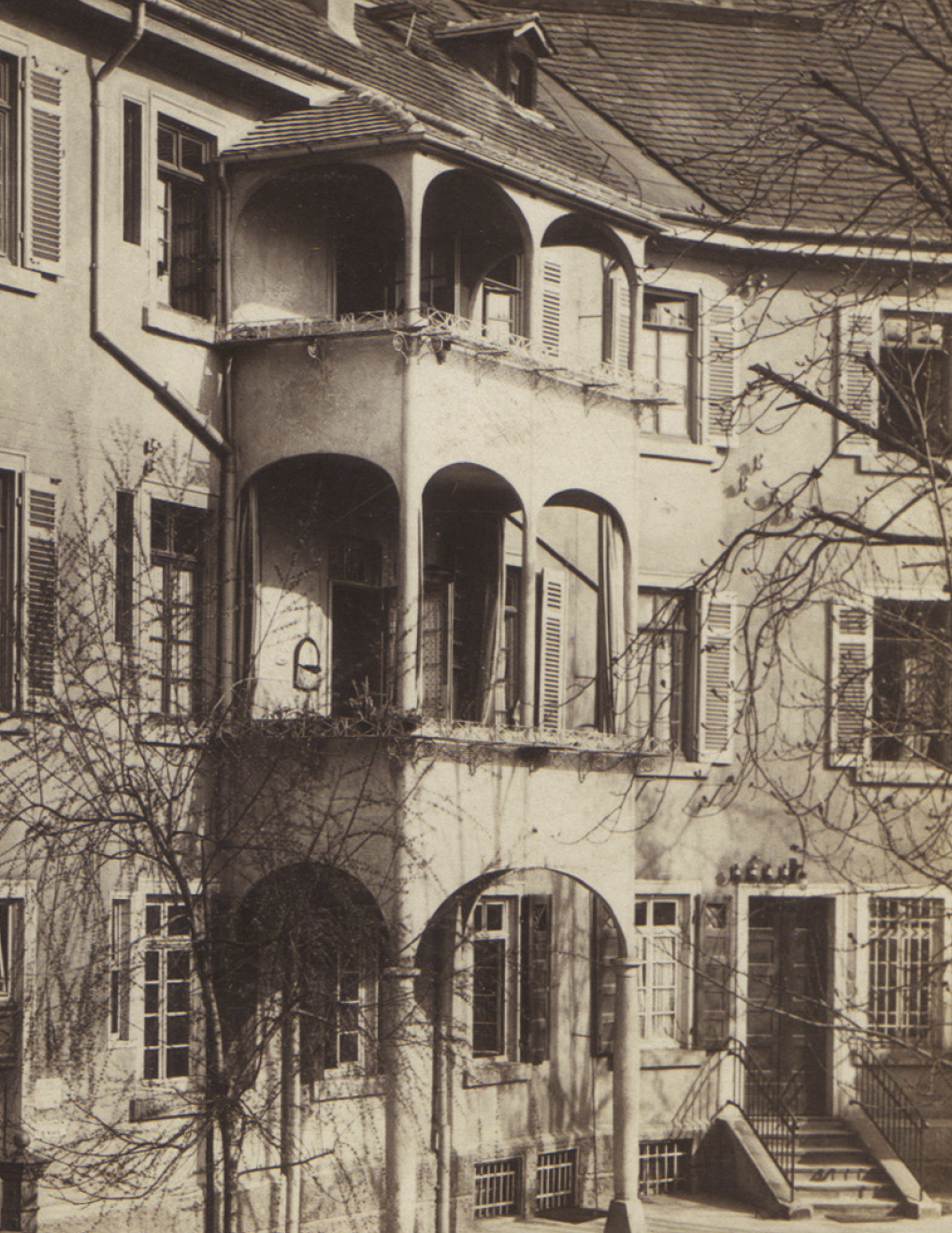
The Terraces
A Cursed Circle
More than six months after the happy trip during which they became engaged, Elisabeth was once again searching for her path. Through a newspaper article, Leopold discovered a rural educational institution that seemed suitable for her. He contacted the school, and they agreed to accept her as a trainee for a trial period.
Elisabeth threw herself enthusiastically into her new life, but as her world expanded, Leopold began to feel increasingly distant from her. At the school, she was known as his “fiancée,” but outside its walls, their engagement still had to remain a secret.
Elisabeth was deeply influenced by the new ideas and people she encountered there. Leopold had once been the central figure shaping her thinking, but now she was surrounded by teachers and others who influenced her just as strongly. Tensions erupted when Elisabeth promised financial support for a school project on Leopold’s behalf without asking him first. He refused, and she was hurt. Yet their love continued, time and again, to bridge the distance created by their arguments.
The situation led Leopold to think seriously about their future together. Elisabeth came from a world very different from his own, and he began to fear that if he joined his life to hers, further conflicts would inevitably follow.
And the real problem remained unresolved: their mothers. Leopold felt that both women needed their children and that leaving them would be a kind of sin. The strain wore him down, and in a letter to Elisabeth, he described their situation as a “cursed circle.”
They met and tried to find a way to start over, but during their conversation, Elisabeth said something about his mother that deeply hurt him. Leopold realized that this conflict was not going to disappear. The conversation ended with the breaking of their engagement.
But the broken engagement did not mark the end of their relationship. Leopold insisted on continuing to support Elisabeth and her mother financially. He told her: “The two years you spent with me were among the best and happiest of my life, and nothing I spent on them was wasted.”
A few days later, a letter arrived from Berlin: Elisabeth had been accepted at a hospital. She had only a few weeks left at home before beginning a new chapter in her life.
Berlin
Elisabeth left for Berlin. She was no longer the same dreamy young woman. her experiences had made her more mature. She began her training at a large hospital, where she discovered that the work was demanding, impersonal, and technical. In her first few days, she witnessed a tragedy: after being scolded at work, a young nurse attempted to take her own life using poison from the laboratory, but luckily survived. Elisabeth was deeply shaken. After about four weeks, a health problem prevented her from continuing her nursing training, and she was dismissed.
She told neither Leopold nor her mother. When she was informed that she had to leave, she broke down once again. The future she had tried to build for herself had collapsed.
Her sense of failure plunged her into a serious crisis. Leopold, of course, continued to support her. He traveled to Berlin and, through his connections and persistent efforts, secured a training position for her at a children’s clinic. By then, Elisabeth had recovered, and working with children felt like a fresh start. At last, she believed she had found her calling.
But while Elisabeth was finding her direction, Leopold felt increasingly lost. He began seeing other women again, but whenever someone caught his attention, he compared her with Elisabeth- and Elisabeth always won.
Through it all, Leopold felt that something big and dangerous was getting closer. His worries seemed to match the tension of the time. Looking back, he described feeling as if he had sensed that a “worldwide disaster” was coming.
1914
In the early summer of 1914, Leopold and Elisabeth naively believed in a German victory. They saw the war as a struggle between good and evil and believed it would lead to a better world. They still knew almost nothing about what truly lay behind it: propaganda and lies, false promises, the unequal distribution of danger and sacrifice, and the influence of wealthy industrialists.
During the first weeks of the war, Leopold expected to be called up. But because his family factory produced supplies for the military and he was needed as its manager, he received a exemption from military service. At the end of the first month of the war, with distance still separating them and their longing for each other returning, Leopold sent Elisabeth roses and a letter that began: “My Elisabeth!” He described his feelings for her as a combination of friendship, romantic love, and an almost fatherly urge to protect and care for her.
Leopold wrote that as long as they remained united, full of love and determined to be together, they could overcome any obstacle. He asked her not to make any decisions just yet, while the great war was raging within them as well.
Two weeks passed without another reply from Elisabeth. Worried, Leopold sent her a brief note and told her that his brother, Julius, had been sent to the front in France. Before his departure, Leopold had given him the four-leaf clover Elisabeth had once given him, as a farewell blessing and a token of good luck.
Elisabeth replied that she missed Leopold and thought of him constantly, but she also wrote: “Unless a miracle happens, one day we will have to part.” She was glad that Leopold had given her clover to Julius, the brave and kind young man she admired so much, and hoped it would bring him luck.
She explained that she and her mother had begun helping a poor family whose father had gone to war, even taking in the family’s three children. Later, they also cared for war orphans for short periods. Elisabeth thanked Leopold for inspiring in her the desire to give and truly help others.
The early excitement of the war was already beginning to fade. Leopold wrote to Elisabeth that the losses were heavy, German forces were retreating, and every household lived in fear that the angel of death had already struck their family- or soon would.
Thoughts of death pushed Elisabeth to reveal more about her past. She confessed that lying had not been a single incident but a pattern that had developed over years of fear, shame, and a desire to appear better and purer in his eyes than she believed herself to be. She told him that she had learned to hide things as a child, early in their exchange of letters, she had copied poems instead of writing them herself, and that when she was seventeen, a young man she knew had tried to force himself on her while driving her in his car. At the last moment, she managed to push him away and escape. Alongside these revelations, she confessed to other small lies.
Leopold struggled to believe that he had almost called her his wife and wondered how they could have built a life together on a foundation of lies. He began to think that she suffered from a deeper moral failing.
Years later, Leopold wrote about how young, rigid, and unnecessarily cruel he had been. He understood that he had demanded more of Elisabeth than he demanded of himself and had failed to consider the circumstances in which she had grown up or the reasons lying had become a way for her to protect herself. At the time, however, he believed she had to confront her dishonesty and its causes on her own.
Meanwhile, Julius was in Flanders, near the sea, still carrying Elisabeth’s clover. He knew nothing about the crisis between them. For Leopold, the clover now took on an almost fateful meaning: if it protected Julius and he returned home safely, Leopold’s faith in Elisabeth would return with him. But if fate decided otherwise, the consequences would be far worse for them all.
Elisabeth received Leopold’s harsh letter as a punishment she believed she deserved, perhaps even as a judgment from above. Leopold, meanwhile, quickly began to regret the painful things he had written. Elisabeth withdrew from almost everyone and refused to continue writing to him because she no longer felt worthy. The only person she remained in contact with was Julius. She asked him to keep writing, because all her hope depended on his safe return.
Time passed, and the first winter of the war arrived. Soldiers at the front suffered from cold and disease. Leopold remained at home, in his warm office, but inside he felt frozen and tormented. Sometimes he even thought it would be easier to be at the front, where duty and danger might silence his personal pain.
Elisabeth continued to struggle with anxiety. When she did not hear from Julius for a long time, she sent Leopold a telegram, worried about his safety. Leopold reassured her and began speaking to her more gently again.
Lonely in Berlin and missing her mother, Elisabeth started thinking about returning home and finding a new job. She eventually went back to her hometown, where she was accepted as an assistant nurse at a new maternity hospital for soldiers’ wives. Elisabeth suspected that Leopold had helped arrange the position and thanked him. He was glad she had finally found the work she had been searching for, but knowing that she was close to him again unsettled him.
Elisabeth still felt unable to see him. She set one condition for herself: she would not meet Leopold until Julius, carrying her clover, returned safely. His fate had become a kind of test-or atonement. Only if he came back, and she felt that she had been “forgiven,” would she be able to look Leopold in the eyes again. Leopold struggled to accept her self-punishment and persuaded her to meet him.
Eight days later, Leopold and Elisabeth finally saw each other again - after nine months apart.
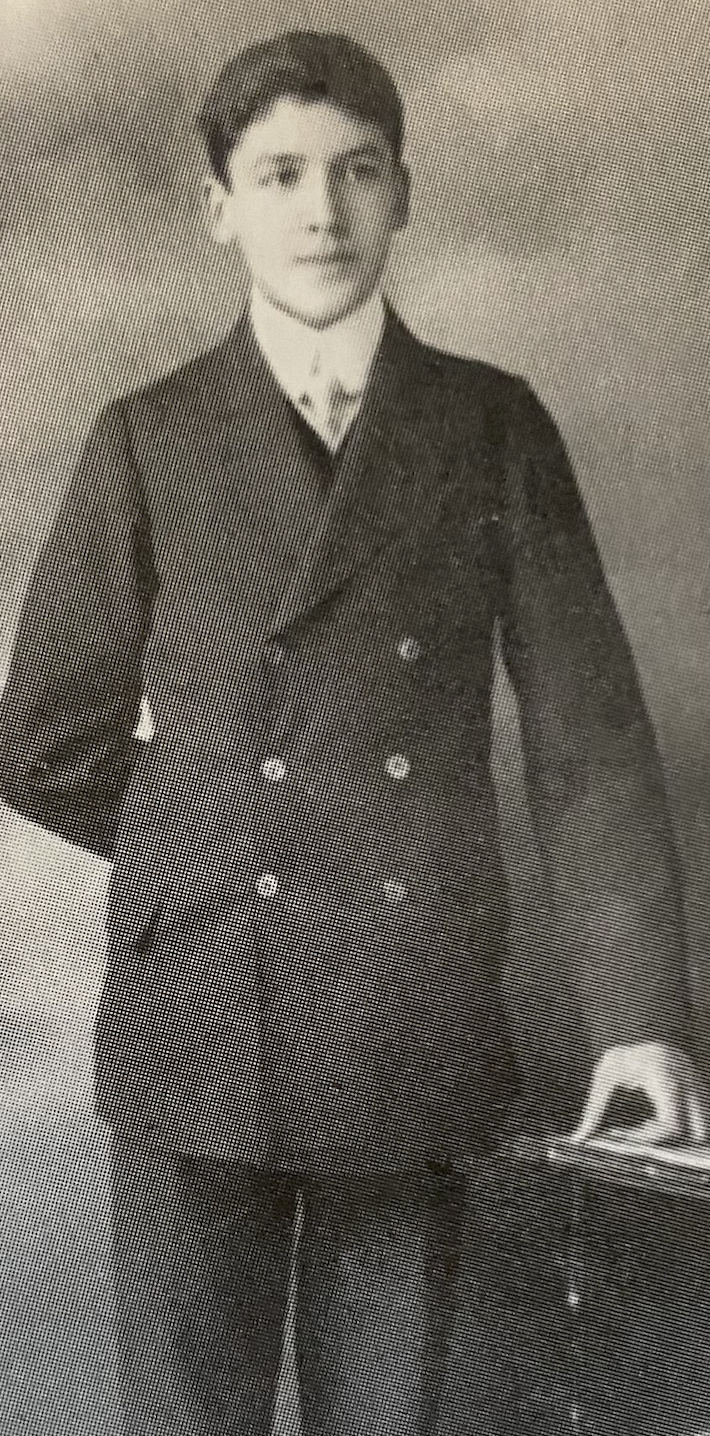
Julius Marx
The Fateful Clover
During their meeting, Leopold told Elisabeth that he felt guilty about making money from the war. To rid himself of “the curse of tainted money,” he began donating his profits each month to support the families of his employees who had been called up for military service. He even personally read and answered every letter his workers sent from the front.
He tried to persuade Elisabeth to abandon her superstition and stop placing their fate in the hands of a “higher power” or tying the future of their relationship to his brother’s fate. After all, he was the one who had created that belief in the first place, but he now saw it as a superstition born of arrogance.
The thought that consumed him led to an idea: he would take his brother’s place and go to the front himself. If he did, Julius could return from danger, and Elisabeth would be freed from the fear and the “sign” that haunted her. For Leopold, risking his own life was also a way to atone for the guilt he felt over how harshly he had treated her. If he had once placed another person under “fate’s judgment,” he was now willing to put himself there instead.
The second year of the war began. Daily experiences with suffering and death changed Elisabeth. She cared for soldiers’ wives, soldiers on leave, and newborn babies, and sometimes had to confront their deaths. Yet this work also helped her heal. She focused on the pain and difficulties of others and was no longer constantly focused on her own.
Elisabeth wrote to Leopold that she longed to speak with him closely and openly again. She remembered their happiest days together and how he had once called her his “bride.” Her turbulent love for him gradually became a deep and quiet friendship. She prayed for his safety and his brother’s, but she had another prayer as well: she wanted Leopold to find another woman. To her, if he could love someone else and build a life with her, it would be the final proof that she had truly been set free and forgiven.
Elisabeth could even imagine who that woman would be: a woman from a good Jewish family, beautiful, intelligent, and kindhearted enough for Leopold to tell her about Elisabeth without demanding that he erase her from his life.
She even imagined Leopold’s future children visiting her one day, and how happy she would be to care for them. Only when Leopold moves on and finds the right woman, she will feel that the past is truly behind her.
Be Careful What You Wish For
In the autumn of 1915, while staying with a family, Leopold met a young woman named Judith. He was immediately impressed: she was beautiful, thoughtful, and mature, and their conversation became deep and meaningful on their very first evening together. After dinner, the subject of the Bible came up. Leopold realized that the family discussed it without having actually read it, so he suggested that they read it together and see what it truly said.
Through their conversations about the Bible and the New Testament, Leopold and Judith discovered a deep intellectual connection. Judith was an orphan and the last surviving member of her family, her grandfather had taken her in. Leopold was struck by the fact that he had found a young Jewish woman who shared his depth, maturity, and outlook on life. During his visit, they met repeatedly, and after she left, they began writing to each other extensively.
This time, Leopold decided to hold himself to the same standard of truth he had demanded of others: simple, complete honesty. In a long, 24 page letter, he told Judith the entire story of his relationship with Elisabeth, hiding nothing. Like any young woman falling in love for the first time, Judith was not pleased to discover that she was neither his first love nor his only one, but she responded with understanding. She even felt that she should meet the woman from whom she was, in a sense, about to receive Leopold and her future with him.
Leopold wrote to Elisabeth about meeting Judith and asked to see her so he could explain everything. Just then, the “clover leaf” returned from the front on leave. Julius wanted to see Elisabeth, who had worried about him throughout his time away, but she had only one evening available. It was therefore decided that Julius would join her meeting with Leopold.
The three met together. Elisabeth appeared happy and welcomed this new development in Leopold’s life. They even sent Judith a message together. But Leopold had no idea what was truly happening inside her.
For Elisabeth, the clover had become a heavy burden, a symbol of Julius’s fate. Now that she had seen him healthy and unharmed, while Leopold was beginning a new relationship, just as she had wished- she felt an overwhelming sense of relief.
For Leopold, the opposite happened. The more life seemed to smile upon him, the heavier his conscience became. He felt that someone living in safety while others risked their lives did not deserve such comfort and happiness. A troubling thought began to take hold: This is too good. Something bad has to happen.
Leopold felt compelled to answer to his conscience. He submitted a personal request to the Minister of war, explaining that he could no longer justify staying at home and urgently asking to take his brother’s place. Julius, of course, knew nothing about it. Leopold sent Judith a copy of the request.
Two days later, he traveled to see her and found her distressed and confused. Why, of all times, did he insist on going to war now, just as he was about to join his life with hers? And why had he acted without consulting her first? During a long walk, he explained his reasons, and she came to understand.
On that same walk, Judith became his fiancée.
Two days later, Leopold introduced his fiancée to his mother. The following day, they visited Elisabeth together at her workplace. Their meeting was brief, but that very evening Elisabeth sent Judith a letter and flowers.
“There are wishes that a person brings before God from the depths of the heart, only to be startled when they are suddenly fulfilled. That is what happened to me this time, when the answer to my most secret wish, born during the most difficult hours of my life, stood before me in living form. That is why I could not yet reach out my hands to you today as I wished, and as my friend’s fiancée deserves. Accept these flowers—they will say everything I could not say to you.”
Elisabeth even promised to light a candle for them on her Christmas tree.
As the holidays and the New Year approached, Leopold and Judith sent Elisabeth gifts. Leopold wrote that he was happy with Judith, yet felt almost guilty about his happiness during the war.
“By what right do I enjoy such a beautiful present while millions of my brothers stand in battle? What must I do to deserve it? Will all that has been given to me now one day be taken away - with interest?”
Elisabeth thanked him for the gifts and responded with love and acceptance, reflecting on everything their years together had given her: “It will remain with me and guide my steps until my soul enters eternity and there bears witness to everything it received from you.”
Leopold did not yet know that his guilt would lead the angel of death to knock on his door-and collect double.
There is a well-known phenomenon called survivor’s guilt:
someone who survives a disaster struggles to accept that they are still alive while others were not so fortunate. Sometimes, they feel unworthy of happiness, love, or a future, as though they must pay a price simply for surviving.
A deep, quiet, but dangerous belief can take root: If something good happened to me while something terrible happened to others, I must suffer to balance the scales.
When another tragedy occurs later, an unconscious sense of relief may emerge alongside the pain: Now I have been punished too. Now the debt has been paid. Not because the loss is welcome, but because suffering suddenly seems like proof that the world has returned to balance.
Perhaps this is the mind’s way of finding meaning in a reality that sometimes offers no explanation. Without anyone intending it, this deeply rooted belief can pass to the next generation- not as a curse, but as a fear of showing happiness, treating oneself to something expensive, or simply enjoying life without guilt, as a sense of debt and the constant expectation that something good is about to be taken away.
Perhaps healing begins with understanding that being alive is not a betrayal of the dead. That we are allowed to live fully, with love and joy, without paying an additional tax of sorrow and guilt. After all, bad things happen to good people too, and God’s ways are beyond our understanding.
I know this was an especially long chapter, and I appreciate you reading this far.
In the next chapter, Judith will prepare for her wedding to Leopold. Shortly afterward, he will be sent to war, and Julius will be called up again- this time in a different role. Have Elisabeth’s feelings truly disappeared, or will jealousy awaken just when she least expects it? How will Leopold and Julius’s mother cope with having both sons at war? And will the lucky clover survive its greatest test and protect them both?
The connection between the three will continue throughout the war- until, suddenly, neither woman hears from Leopold for months.
The next chapter will be an especially powerful one you won’t want to miss.
